Friday 23 / October / 2026
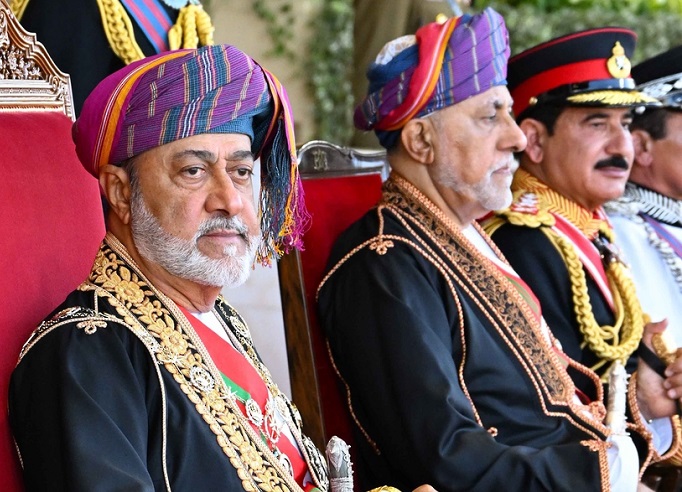
Muscat: The Sultanate of Oman will celebrate tomorrow, Sunday, the anniversary of His Majesty Sultan Haitham bin Tarik’s Accession Day, which falls on the eleventh of January. The blessed Omani march continues its renewed renaissance with a clear and ambitious vision, built upon a national system that confidently and competently enhances future prospects.
The eleventh of January represents a moment of pride and honour for every Omani and resident on this benevolent land, and an occasion to renew loyalty and gratitude to the leader of the march, and to continue giving in the spirit of "Oman of the Renewed Renaissance" to build a prosperous future that will be enjoyed by coming generations, where ambitions and hopes are realized under the wise leadership of His Majesty the Sultan.
The Sultanate of Oman continues its march in an advanced phase of responsible national work, based on entrenching the principles of good governance, enhancing integrity and transparency, solidifying the role of institutions, and establishing the pillars of sustainable development, proceeding with determination and steadfastness towards achieving the goals of "Oman Vision 2040," in a way that enhances its status and preserves its accomplishments.
Zahra Mohammed Ridha Al Lawati, Deputy Chairperson of the State Financial and Administrative Audit Authority for Oversight on Bodies, Investments, and Companies told Oman News Agency (ONA) that the wise vision of His Majesty Sultan Haitham bin Tarik has contributed to enhancing transparency and integrity in state institutions, through the consolidation of the rule of law and the assertion of the principle of accountability without exception.
She added that "Oman Vision 2040" supported empowering oversight bodies and enhancing their independence to protect public funds and ensure the integrity of institutional performance. It contributed to spreading a culture of disclosure and clarity in government work, which enhances society's confidence in state institutions, in addition to entrenching the principles of good governance, modernizing the administrative work system to enhance efficiency and prevent shortcomings, and encouraging the raising of performance efficiency and linking functional responsibility with trustworthiness and commitment. This, she affirmed, constitutes a sustainable reformist approach that enhances integrity and preserves the nation's gains.
She affirmed that the Authority works to enhance integrity by executing its assigned tasks, starting with implementing the annual audit plan, and receiving and studying reports and complaints from the public through its various channels. It also works to enhance transparency by implementing the integrity enhancement plan and entrenching governance principles in partnership with other government units, and involving society in reviewing the results of its oversight work through the community summary, which enhances transparency and institutional trust, she further added.
She noted that the Sultanate of Oman achieved remarkable progress in the Corruption Perceptions Index, one of the most prominent international indicators in the field of enhancing integrity, advancing by 20 positions in the 2024 index issued annually by Transparency International in Berlin. It ranked 50th globally among 180 countries, and 4th among Arab countries, compared to 70th in 2023, with a score of 55 compared to 43 in the same year, representing an increase of 12 points.
This progress, she said, reflects the keenness with which the Sultanate of Oman adopts best international practices in the fields of protecting public funds, raising the efficiency of their use, and enhancing integrity.
On his turn, Sayyid Adil Al-Murdas Al Busaidi, Member of the State Council, said: “Since His Majesty Sultan Haitham bin Tarik assumed power in the country, he has taken upon himself to develop and modernize what was achieved throughout the past era, which saw the completion of all modern state institutions and infrastructure.”
He added that the first step taken in mapping out the roadmap was represented by the "Oman Vision 2040" to achieve comprehensive sustainable development, and the participation of the Council of Oman through its two chambers, the State Council and the Shura Council, by reviewing draft laws and formulating their articles in line with the public interest. The Council also initiates preparing specialized studies in various fields, in addition to devising plans and work programs for the vision and ensuring their implementation according to governance system standards characterized by transparency and integrity.
He pointed out that "Oman Vision 2040" contributed to developing the work of the state's administrative apparatus. The government began to reduce bureaucracy in the organizational structure of institutions by merging some of them at times and transferring some competencies to the private sector at other times, which eliminated overlap and similarity in the work of institutions, simplified procedures, and shortened them, he added.
He noted that introducing modern technologies to provide services and facilitate access to them has become imperative, with the prime aim of keeping pace with development and enhance government work. This, he said, was embodied in the launch of several electronic portals and modern applications that provided significant services to citizens.
Meanwhile, Mubarak Khamis Al Hamdani, Director of the National Foresight Office at the Ministry of Economy, told Oman News Agency (ONA) that the development philosophy of His Majesty Sultan Haitham bin Tarik is based on four main pillars. The first is the necessity of building a solid and sustainable foundation for economic and social plans; the second is harnessing legislative and institutional frameworks to enable sustainable growth at both economic and social levels; the third is managing development with a philosophy of indicators and prudent follow-up; and the fourth is creating a balanced equation to achieve the objectives of economic policies, meeting the needs of growth and a good life for society.
He added that this philosophy was reflected in the Royal directives and approaches that charted the state's course of action over the past five years, where the focus was clear on how the economy can be capable of generating sustainable and diversified income, alongside focusing on paths to raise spending efficiency and directing it towards strategic structures and necessities that directly impact the sustainability of development.
He pointed out that expanding the productive base through investing in promising sectors, diversifying international and economic partnerships, and vigorously pushing the foreign investment file, whether through the government or through the direct attention of His Majesty the Sultan, were among the most prominent features of the past phase.
He explained that this philosophy went hand in hand with establishing an integrated and flexible social protection system, based on accurate and fair targeting, protecting the most needy groups, and ensuring the ability of various social groups to harmonize with the objectives and developmental policies.
He noted that one of the features that distinguished Oman's new development model on the economic level is enhancing participation in financing public services, while maintaining the central role of the state in supporting and financing those services, consistent with enhancing resources and directing them to serve economic development. Among these features also is the shift of government investments from asset dispersion to their governance, consolidation, and maximizing returns through the establishment of Oman Investment Authority, reflecting a developmental vision that treats public assets as a strategic lever to restructure the economy, enhance economic diversification, and empower them as a gateway for national and external partnerships.
On the international front, the domestic achievements were not isolated from Oman's active presence, as Omani foreign policy represents the other face of the national work system.
Under the wise leadership of His Majesty Sultan Haitham bin Tarik, the foreign policy of the Sultanate of Oman is based on a firmly established system of steadfast principles that form the core of the Omani diplomatic approach. Foremost among these are respect for state sovereignty, non-interference in internal affairs, good neighborliness, consolidating the values of peace and coexistence, and prioritizing the language of dialogue and understanding in addressing differences and conflicts.
The Sultanate of Oman is keen for its foreign policy to be a factor of stability and construction in its regional and international surroundings, relying on the rules of international law and the United Nations Charter, and believing in the importance of joint work and multilateral cooperation, which enhances international security and peace, serves the supreme interests of peoples, and simultaneously aligns with the targets of "Oman Vision 2040" in supporting sustainable development and enhancing the status of the Sultanate of Oman as a reliable and responsible partner in the international community.
Omani diplomacy plays an active and pivotal role in building a wide network of balanced relationships, based on trust and mutual respect with various countries of the world, through pursuing a policy of openness and positive communication, and enhancing bilateral and multilateral partnerships. This achieves common interests and supports paths of cooperation in various political, economic, developmental, and cultural fields.
Omani diplomacy, throughout its extended history, has also contributed to bridging viewpoints, preparing environments for dialogue, and facilitating paths of understanding between different parties in a number of regional and international issues, stemming from its approach based on positive neutrality, credibility, and building bridges not barriers. This has enhanced the international community's confidence in the Omani role as an impartial mediator and a reliable partner in advocating peace and stability efforts, and consolidating sustainable peaceful solutions.
—- Ends/AH