Wednesday 30 / September / 2026
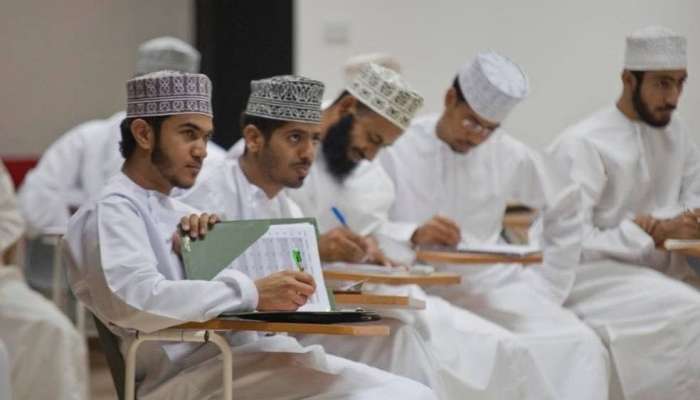
Muscat: A recent academic study has called for restoring the central role of the humanities within Oman’s higher education system, describing them as a cornerstone for building a balanced, sustainable knowledge-based economy.
The study, authored by Dr. Maryam bint Ali Al-Hanaei, Associate Professor of Intercultural Communication, and Prof. Mohammed bin Ali Al-Balushi, Professor of Archaeology and Heritage Studies at Sultan Qaboos University, was published in the Journal of Arabian Studies under the title “Reimagining the Knowledge Economy: A Critical Call to Recentre the Humanities in Omani Higher Education.”
The researchers argue that prevailing narratives surrounding the knowledge economy often equate progress and innovation solely with scientific and technological advancement, overlooking the vital contribution of the humanities and social sciences in developing critical thinking, reinforcing ethical values, and preserving cultural identity.
The study highlights a disconnect between national strategic frameworks—such as Oman Vision 2040 and the Cultural Strategy 2021–2040, which emphasize identity, culture, and creativity—and the realities of higher education practices that tend to prioritise scientific, technical, and business disciplines.
Through an analysis of faculty distribution and student enrolment patterns both inside and outside Oman, the study finds that while the humanities continue to hold a notable presence—particularly in education, community, and cultural fields—their share is gradually declining compared to engineering and technical disciplines, especially among students studying abroad.
The researchers stress that recentring the humanities is neither a luxury nor a purely cultural endeavour, but a strategic necessity for sustainable development. They argue that cultivating informed, creative citizens requires ensuring that scientific and technological progress remains aligned with ethical, social, and cultural values.
The study calls for education and research policies that foster integration between the humanities and scientific disciplines through interdisciplinary curricula, institutional and research support, and the embedding of humanities-based knowledge within national innovation systems—consistent with Oman’s aspirations for a knowledge society rooted in identity and openness to the world.
According to the study’s conclusions, investment in the humanities equips future generations with both technical competence and ethical and cultural awareness, supporting comprehensive and balanced development in the Sultanate.
Speaking to the Oman News Agency, Dr. Al-Hanaei said the research forms part of a broader intellectual project launched in 2022 to reassess the position of the humanities and the knowledge-production system within Omani higher education. She explained that the study presents a methodological critique of neoliberal approaches that frame education primarily as an economic tool measured by profitability rather than human or societal value—an approach that marginalises local and humanistic knowledge and creates ethical and epistemological gaps.
She added that academic experience reveals a clear contradiction between the principles of Oman Vision 2040—which stress identity, values, sustainability, and human development—and educational practices that prioritise technical and professional disciplines driven by market logic. This contradiction, she noted, raises fundamental questions about the purpose of education: whether it should merely supply labour-market skills or also nurture critical awareness, cultural belonging, and intellectual responsibility.
From an intercultural communication perspective, Dr. Al-Hanaei warned that a knowledge economy detached from humanistic and ethical foundations risks cultural homogenisation, erosion of local knowledge, and the separation of innovation from social responsibility.
For his part, Prof. Al-Balushi said the dominance of applied sciences in higher education and development policymaking reflects a deeper epistemological shift that reduces culture and heritage to measurable or economic resources detached from their historical and symbolic meanings. This shift, he noted, transforms humanity’s relationship with heritage from one of understanding and interpretation to functional exploitation.
He added that marginalising the humanities turns culture into a “silent product,” stripped of meaning and disconnected from memory, identity, and continuity. The humanities, he argued, restore the human being to the centre of the knowledge process by treating cultural and historical elements as phenomena rich in meaning that require interpretation before use.
Prof. Al-Balushi emphasised that both Oman Vision 2040 and the Cultural Strategy 2021–2040 place identity and heritage at the heart of sustainable development, making the humanities indispensable. Without them, heritage-related initiatives risk becoming technically successful but culturally shallow and lacking long-term relevance.
He warned that sidelining the humanities weakens society’s ability to critically engage with technology and allows applied sciences to shape values without debate. International experience, he noted, shows that unbalanced technocratic education systems can lead to the erosion of cultural reference points, weakening of language, and loss of historical memory.
He concluded that restoring the humanities is not an idealistic aspiration but a fundamental requirement for building a modern, balanced society—one that places the human being, along with values, memory, and identity, at the centre of the development process.