Thursday 08 / October / 2026
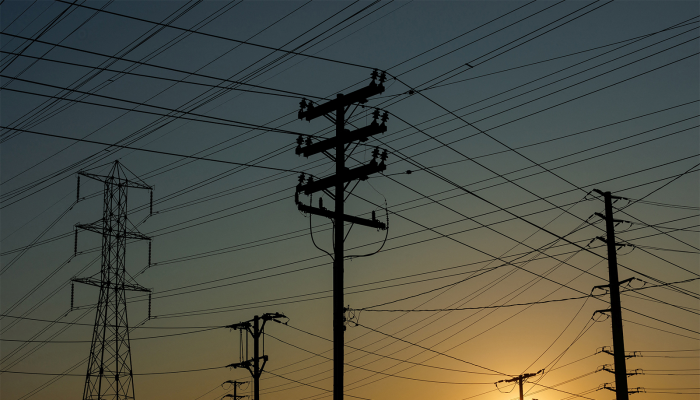
India’s energy sector has achieved significant gains in power generation, expanding capacity by three times in just 15 hours, showing the extraordinary transformation in its power sector. This remarkable feat has not only ensured a reliable supply of electricity to households and businesses across India, but has benefitted millions of underprivileged people from neighbouring countries through power exports.
Bangladesh, Myanmar, Nepal and Bhutan have benefitted from the cheap and reliable electricity from India. These countries struggle to ensure adequate supplies due to higher demand, fuel shortages, seasonal hydropower swings, higher generation costs, among others. Indian power supplies accounted for 10 percent of total demand in Bangladesh in January 2026. India has initiated the building of a grid in the region, which will allow power-deficient countries to get easy access to power.
India’s total installed electricity capacity was 174 GW in 2011, which has now increased to over 475 GW in 2025. India’s power sector managed to fulfill the maximum power demand of 250 gigawatts, even though the per capita electricity consumption increased by almost 40 percent to 1395 kW in one decade. “India has made significant advances in the power sector, achieving universal household electrification while experiencing fewer grid interruptions and maintaining affordable tariffs,” said the World Bank.
The Government of India facilitated the participation of people in power generation through solar and wind modes, through incentives and trading innovation. Also, the involvement of the private sectors, including giants like Tata Group and Adani Group, led to improved power generation capacity, higher efficiency, and greater reliability in India’s energy sector. Now, India is increasingly focusing on nuclear power as reliable, stable, low-carbon energy source through policy support and legal frameworks.
The International Energy Agency (IEA) praised India’s “remarkable” progress in providing 700 million people with an access to electricity and clean cooking since the 2000s. “Electricity security has improved through the creation of one national power system and major investments in clean energy. India is now working on integrating higher shares of variable renewable energy into the energy mix,” it said. “Government of India is continuing to focus on providing secure, affordable and sustainable energy, while achieving its ambitious renewable energy targets and reducing local air pollution.”
India is set to play a pivotal role in the global energy transition, by ensuring healthy balance rising electricity demand and sustainability. Notably, the share of renewable energy (RE) capacity was 220 GW, reflecting India’s strong commitment to achieve the target of 500 GW of non-fossil fuel-based capacity by 2030. India’s tilt toward a sustainable future can be gauged from the added focus on renewables, as thanks to an increase in the installed capacity to 110.9 GW of solar and 51.3 GW of wind power.
Many schemes launched by New Delhi, such as Ujwal DISCOM Assurance Yojana, National Smart Grid Mission, PM-KUSUM, SAUBHAGYA, Deendayal Upadhyaya Gram Jyoti Yojana, among others, ensured 24x7 power supply and widespread adoption of renewable energy technologies. “Over the past decade, India’s power sector has seen robust expansion driven by rising demand, infrastructure development, and strong policy support for both conventional and renewable energy sources,” reads a release by the Press Information Bureau.
Moreover, India succeeded in increasing electricity production without a proportional rise in emissions. IEA Executive Director Fatih Birol said the scale of transformation in India was stunning as its CO2 emissions per person was near the bottom of the world’s emitters. “India is pioneering a new model of economic development that could avoid the carbon-intensive approaches that many countries have pursued in the past – and provide a blueprint for other developing economies,” Birol said.
India has overachieved its commitment made at the COP 21- Climate Summit, by meeting 40 percent of its power capacity from non-fossil fuels in 2022- almost nine years ahead of the 2030 target set under its Nationally Determined Contribution (NDC) to the Paris Agreement. In 2025, it achieved the target of 50 percent, underscoring the clarity and seriousness of the country toward clean energy. The Council on Energy, Environment and Water (CEEW) said India was on track to exceed its NDC target by showcasing that growth and emissions reduction can happen together.
END.