Wednesday 07 / October / 2026
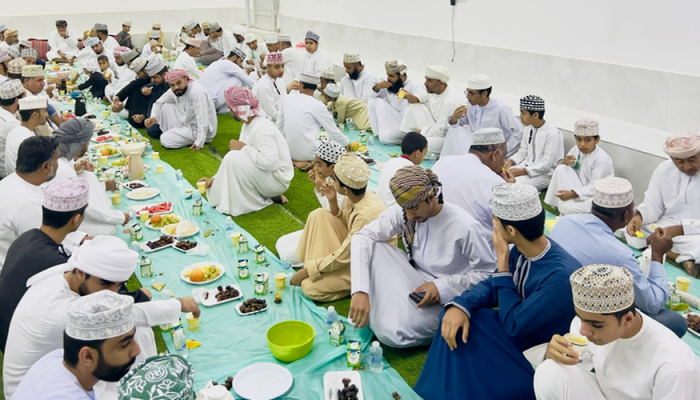
Muscat – The holy month of Ramadan stands as a comprehensive model of life rooted in values, ethics, justice, discipline and humanity. More than a period of fasting, it represents a structured system of principles and commitment that reshapes the relationship between individuals—especially youth—and time, transforming daily routines into a conscious journey of self-development and moral elevation.
Ramadan links actions and decisions to higher human purposes, strengthening young people’s ability to confront modern challenges, resist excessive consumerism, and deepen their sense of responsibility toward themselves and society. It creates a balanced individual capable of managing time, protecting awareness, and navigating life’s pressures with calmness and steadfastness.
Dr. Rajab bin Ali Al-Awaisim, expert in social and educational studies at the State Council, described Ramadan as a unique temporal experience that reorganizes the relationship between humanity and time. In a fast-paced world where youth often feel overwhelmed, Ramadan serves as a turning point—reprogramming thoughts, renewing hope, and transforming fleeting moments into opportunities for growth and reflection.
He explained that fasting is a conscious practice requiring patience, willpower, and self-control. The structured rhythm of prayers, worship, rest, meals, reading, and work transforms time into a purposeful experience, where every minute becomes an opportunity for spiritual growth rather than mere consumption.
Ramadan also strengthens mental and intellectual well-being. Acts of remembrance, contemplation, charity, and volunteering promote inner peace, social belonging, and community cohesion. By reducing distractions and encouraging reflection, the month enhances young people’s ability to manage psychological and social pressures with balance and responsibility.
From a consumer perspective, Ramadan restores moderation. Fasting trains the soul to control desires and shifts focus from material indulgence to sustainable giving. It teaches distinction between essential needs and market-driven wants, making the month a comprehensive school of self- and time-management.
Dr. Tahira bint Abdulkhaliq Al-Lawati, psychological and educational consultant, noted that Ramadan offers an opportunity to establish sustainable time-management habits. She emphasized that while many succeed in organizing their schedules during the month, others misuse it by staying up late and sleeping through the day.
She warned that reversing natural sleep cycles affects biological rhythms and gland functions, leading to physical and psychological imbalance. Productivity, she said, can actually increase during Ramadan, as uninterrupted daytime hours allow sustained intellectual focus without the break of lunch. Historically, major events such as the Battle of Badr during Ramadan demonstrate that the month has never been associated with inactivity.
Abdullah bin Mohammed Al-Abri, researcher in behavioral economics and member of the Omani Economic Committee, highlighted that Ramadan reshapes the “entire structure of the day” in the Sultanate of Oman. The rhythm of homes, schools, workplaces, and mosques changes, creating clear daily milestones—Suhoor, Fajr, work or study, Asr, Iftar, and Taraweeh.
He stressed that behavior change does not occur automatically. Instead of relying solely on willpower, individuals should make positive habits simple, small, and linked to fixed times. Ramadan weakens “automatic mode” habits and creates space to reset behaviors—such as reducing excessive phone use or socially recalibrating late-night routines.
Dr. Salih bin Said Al-Hosni, expert in Hajj affairs at the Ministry of Endowments and Religious Affairs, described time as humanity’s true capital. Islamic teachings emphasize the sanctity of time, with prayer and fasting tied to precise moments, reinforcing discipline and awareness.
He underscored the importance of minimizing digital distractions, planning daily tasks carefully, prioritizing responsibilities, and engaging in collective worship and charitable work. Such conscious planning, he said, ensures that Ramadan’s discipline becomes a lasting habit rather than a temporary practice.
Dr. Jihad bin Jamil Hamad, Associate Professor of Sociology at Sultan Qaboos University, described Ramadan as a “positive temporal shock” that redefines time qualitatively rather than quantitatively. Instead of being trapped in a production-consumption-entertainment cycle, individuals experience a day structured around spiritual milestones—Imsak, Iftar, Taraweeh, Suhoor, and supplication in the last third of the night.
He noted that Ramadan fosters a shared communal rhythm, giving youth a sense of belonging and collective discipline. Fasting becomes a practical exercise in resetting one’s internal system and demonstrating that change is possible.
However, he concluded that while Ramadan provides an objective opportunity for transformation—supported socially and spiritually—the sustainability of change depends on individual awareness and determination. For some, Ramadan remains a temporary exception; for others, it becomes a launching point toward lasting personal growth.
In essence, Ramadan is not merely a month of altered schedules—it is a way of life that harmonizes time with meaning, values with spirit, and humanity with shared purpose.