Wednesday 29 / July / 2026
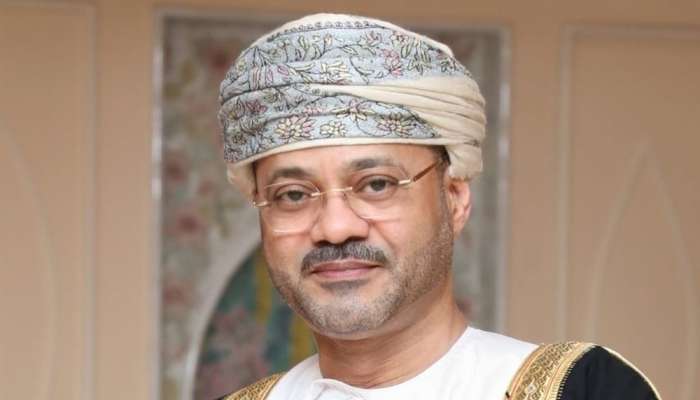
Washington — In a wide-ranging interview, Sayyid Badr bin Hamad Al Busaidi, Oman's Foreign Minister, said diplomacy between the United States and Iran is not failing and that a breakthrough agreement on Tehran’s nuclear programme is “within reach” — provided negotiators are given additional time to close remaining gaps.
Speaking amid rising tensions and warnings of possible military action, Al-Busaidi — whose country is mediating the talks — acknowledged that progress has been difficult but insisted that substantial advances have already been made.
“I don’t think any alternative to diplomacy is going to solve this problem,” he said. “A deal is in our hands if we are allowed the space to negotiate.”
A “Completely New” breakthrough
At the heart of the negotiations, Al-Busaidi described what he called a significant breakthrough: an agreement in principle that Iran would not accumulate enriched uranium.
According to his account:
• There would be zero stockpiling of enriched uranium.
• Existing stockpiles would be down-blended to low, non-weapons-grade levels.
• Comprehensive verification would be conducted by the International Atomic Energy Agency (IAEA).
He argued that eliminating stockpiles removes the pathway to a nuclear weapon.
“If you cannot stockpile enriched material, then there is no way to create a bomb,” he said.
He also indicated that inspectors would have full access to nuclear facilities, including sites such as the Isfahan Nuclear Technology Center, and that verification mechanisms could be implemented within approximately 90 days of a finalized agreement.
Disagreement Over Urgency
The interview comes after Donald Trump publicly expressed dissatisfaction with the pace of negotiations, warning that Iran must meet U.S. demands or face potential consequences.
Al-Busaidi said he believes both American and Iranian negotiators are serious about reaching a deal and that broad political terms could be agreed upon quickly. The three-month timeline he mentioned, he clarified, refers to implementing technical details such as verification and stockpile removal — not negotiating the core political framework.
He confirmed discussions with JD Vance and described U.S. engagement as attentive and constructive.
Military Strike Concerns
When asked about the possibility of U.S. or Israeli military action, Al-Busaidi expressed concern, referencing last year’s strikes on Iranian nuclear facilities.
He declined to speculate on current military planning but warned that any strike would complicate diplomacy.
“I don’t think any other acts can solve this problem. It will only complicate and delay it.”
Ballistic Missiles and Broader Issues
While U.S. officials have suggested that Iran’s ballistic missile program should be part of discussions, Al-Busaidi emphasised that the current negotiations are focused exclusively on the nuclear file.
However, he said Iran has signalled openness to broader regional dialogue on economic and security issues involving Gulf countries — potentially including missile concerns — in a separate framework.
Sanctions and Human Rights
Iran is seeking sanctions relief as part of any agreement. When asked whether human rights concerns are being addressed, Al-Busaidi said the current mandate is strictly limited to nuclear matters, describing it as the most urgent issue.
What Happens Next?
Technical talks are scheduled in Vienna with the IAEA to finalise verification details. Al-Busaidi expressed confidence that:
• Political agreement could be reached quickly.
• Implementation of inspections and stockpile controls could be completed within three months.
• A diplomatic resolution remains possible — if negotiations are allowed to continue uninterrupted.
The Bottom Line
Oman’s message to Washington and Tehran is clear:
• A nuclear-only deal is close.
• Zero stockpiling and full verification are central pillars.
• More time — not military action — is the key to success.
Whether that window remains open will depend on political decisions in Washington, Tehran, and potentially Jerusalem in the weeks ahead.