Thursday 15 / October / 2026
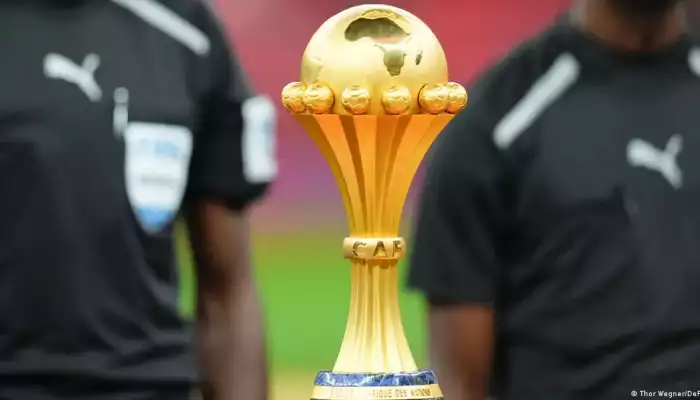
Senegal were sensationally stripped of their Africa Cup of Nations (AFCON) title on Tuesday night and tournament hosts Morocco crowned champions instead, two months after African football's showpiece event concluded with a chaotic final in Rabat.
The Confederation of African Football (CAF) declared that Senegal had "forfeited" the January 18 final by leaving the pitch in protest over a controversial late penalty awarded to Morocco — an incident that also prompted an attempted pitch invasion by furious Senegalese fans.
When the Senegalese players eventually returned to face the penalty 15 minutes later, Moroccan star Brahim Diaz inexplicably and controversially chipped the ball weakly into the goalkeeper's hands, missing the chance to win the cup and sending the final to extra time — where Senegal went on to score the winning goal.
In the immediate aftermath, FIFA President Gianni Infantino had condemned "some Senegal players" for the "unacceptable scenes" and said: "It is unacceptable to leave the field of play in this manner, and equally, violence cannot be tolerated in our sport, it is simply not right."
At an initial disciplinary hearing, CAF imposed bans and fines totaling over $1 million on both Senegalese and Moroccan players for their roles in the farcical scenes — which also included on-field scuffles and attempts by Moroccan ball boys to steal the Senegal goalkeeper's towel — but allowed the sporting result to stand.
AFCON: what did the CAF board say?
CAF's Disciplinary Board rejected Morocco's initial protest, but the appeals board has now ruled in their favor after finding that the conduct of the Senegal team fell "within the scope of Articles 82 and 84 of the Regulations of the Africa Cup of Nations."
Those articles state that "if, for any reason whatsoever, a team refuses to play or leaves the ground before the regular end of the match without the authorization of the referee, it shall be considered the loser and shall be eliminated for good from the current competition."
With Senegal declared to have forfeited the match, their 1-0 win was annulled, and Morocco awarded a 3-0 victory by default, a result that sees the Atlas Lions crowned African champions for the first time in 50 years.
In a brief statement, the Royal Moroccan Football Federation said it "acknowledges the decision" but insisted that its appeal was never intended to contest the sporting performance of the teams involved. It said it merely requested the proper application of regulations for the "clarity of the competitive framework" and the "stability of African competitions."
'They are mad': Senegal to appeal to CAS
Senegal quickly announced that they would seek to overturn the decision at the Swiss-based Court of Arbitration for Sport (CAS).
Defender Moussa Niakhaté, who currently plays for French club Olympique Lyonnais following spells with Bundesliga team Mainz 05 and Premier League side Nottingham Forest, posted a photo on Instagram of himself holding the trophy and the words "Pour l'éternité" (for eternity) and, presumably referring to CAF, "Ils sont fous" (they are mad).
The whole affair has cast a shadow over what had otherwise been considered a successful and well-organized tournament in Morocco, which will also co-host the World Cup in 2030.
The country has seen widespread protests against preparations for the World Cup, with demonstrators arguing that government funds should be invested in Morocco's ailing healthcare system, rather than new stadiums and hotels.
Last week, the 2026 Women's Africa Cup of Nations (WAFCON), scheduled to kick off in Morocco on March 17, was postponed until July, just 12 days before the opening match.
In a statement, CAF cited "unforeseen circumstances" but gave no details for the decision. "It is a combination of factors, and it is not a decision taken lightly," Luxolo September, CAF's head of communications, told DW.