Monday 28 / September / 2026
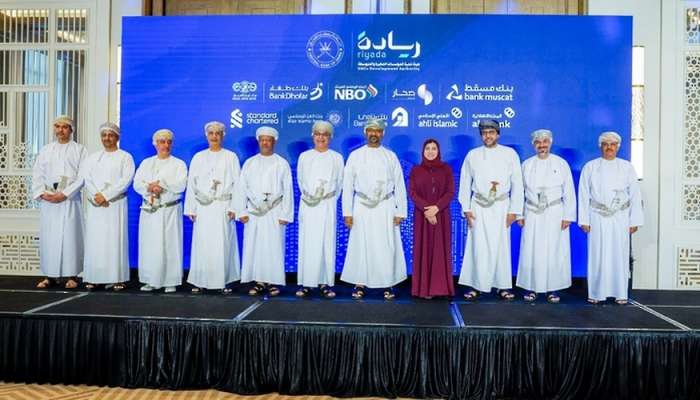
Muscat: The Authority for Small and Medium Enterprises Development (Riyada) signed a cooperation programme on Sunday in Muscat with a number of commercial banks in the Sultanate of Oman. The programme aims to facilitate access to financing and provide a comprehensive package of financial and non-financial solutions to support entrepreneurs and small and medium enterprises (SMEs), thereby contributing to their growth, expansion, and sustainability.
This initiative seeks to enhance the business environment and support the growth of SMEs as part of integrated efforts between the government and banking sectors to broaden the scope of support provided to entrepreneurs.
The signing ceremony was held under the patronage of Ahmed Jaafar Al Musalmi, Governor of the Central Bank of Oman (CBO). The agreement was signed by Halima RashidAl Zar'ee, Chairperson of Riyada, alongside the CEOs of the participating commercial banks.
The cooperation programme is designed to develop a more efficient and flexible financing ecosystem through the creation of tailored financial products that meet the needs of SMEs at various stages of their development. It also includes the provision of banking incentives and facilities, the implementation of joint training and awareness programmes, the promotion of financial literacy, and the exchange of expertise between the two parties. Furthermore, it aims to enhance guarantee mechanisms and co-financing arrangements, thereby helping to reduce risk and encourage the expansion of financing for this vital sector.
This collaboration reflects the national commitment to empowering SMEs as key drivers of economic growth. The sector is witnessing increasing growth in the Sultanate of Oman, with over 270,000 registered SMEs, of which more than 130,000 are registered with Riyada. Approximately 30,000 enterprises hold the "Riyada Card" (Entrepreneurship Card).
The signing of the programme also comes amid ongoing efforts by the banking sector, supported by the Central Bank of Oman, to increase the volume of financing directed to SMEs. A target has been set to allocate no less than 5 percent of commercial banks’ loan portfolios to this sector, with outstanding financing currently amounting to nearly RO 1 billion. This reflects growing interest in supporting the sector and enhancing its contribution to the national economy.
The programme is expected to generate direct economic and social impact by helping create sustainable employment opportunities for Omani nationals, boosting economic activity across the various governorates of the Sultanate of Oman, increasing local value-added content, localizing industries, facilitating knowledge transfer, and enabling SMEs to contribute effectively to building an innovation- and knowledge-driven economy.


