Monday 19 / October / 2026
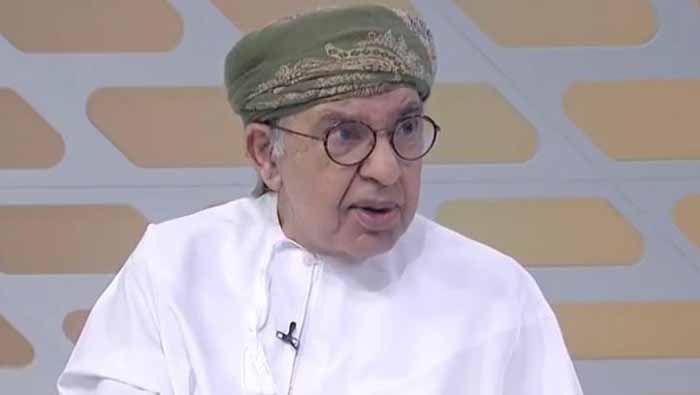
In the midst of the controversy sparked by former U.S. Ambassador Marc J. Sievers’ article on what he described as “the failure of Omani diplomacy,” there is an urgent need for a measured reading—one that moves beyond reactive responses and returns the discussion to its professional framework: What is mediation? And by what standards is its success or failure measured?
First, it must be clarified that mediation, in the lexicon of international relations, is not a magic tool that prevents wars. Rather, it is a complex process aimed at reducing the likelihood of war, or containing it once it breaks out. Modern history—from the Camp David Accords negotiations to the Iranian nuclear deal talks—has shown that reaching major settlements takes years of quiet work, often passing through stages of setbacks and collapse before coming to light. Therefore, linking the success of mediation to an immediate outcome—such as preventing a specific war—is a reductive oversimplification that does not align with the very nature of diplomacy.
From this perspective, assessing Oman’s role through the lens of “Why didn’t it prevent the war?” is a flawed question at its core. States do not abandon their strategic choices because of a mediator’s advice, no matter how trusted that mediator may be. The mediator possesses tools of persuasion, not coercion. If major powers like the United States, or regional powers like Iran, choose to follow their own paths, then holding the mediator responsible for that is akin to blaming a doctor for a patient’s refusal to undergo treatment.
The second point concerns understanding the nature of Omani foreign policy. For decades, the Sultanate of Oman has adopted an approach based on “positive neutrality”—not in the sense of passively keeping an equal distance from everyone, but rather engaging with different parties to keep dialogue channels open. This approach has never been about taking sides; it has been a strategic choice to protect stability in a highly sensitive region, especially around a vital waterway like the Strait of Hormuz.
Engaging with all parties, including Iran or actors in Yemen, is not a departure from neutrality; it is a prerequisite for any effective mediation. A mediator who severs ties with one party loses their ability to influence. Perhaps here lies one of the points of divergence between the Omani perspective and certain American readings, which tend—in moments of tension—to reduce international relations to a binary of “with me or against me,” whereas mediation by its very nature breaks that binary.
Third, it is important to distinguish between the “outcomes of mediation” and the “impact of mediation.” Even when efforts do not lead to a final agreement, they often yield indirect gains: preventing full-scale escalation, delaying confrontations, or maintaining communication lines that could prove critical in moments of crisis. These roles are not measured by headlines, but by quiet accumulations that decision-making circles recognize more than the public does.
In this context, it cannot be ignored that Muscat remained, even at the height of tensions, a meeting point for senior officials and diplomats from various sides. This continuous presence is not diplomatic courtesy; it reflects accumulated trust in Oman’s ability to provide a safe space for dialogue, away from media and political pressures. Effective diplomacy is not conducted on screens, but in rooms where trust is built patiently and quietly.
As for the criticism of some public statements by Omani officials, perhaps a different reading is needed. Expressing concern over escalation, or noting missed opportunities for agreement, is not a departure from “diplomatic silence”—rather, it is often an attempt to sound the alarm before it is too late. In a fast-moving world, a voice of reason can remind parties of the cost of the choices they make.
Moreover, this discussion cannot be separated from the broader shifts in the international system. Today, the world is witnessing a decline in the effectiveness of traditional tools of influence and the rise of more independent regional roles. In this context, Omani policy resembles the model of a “bridge state” that seeks to narrow gaps between adversaries, rather than engaging in polarising axes.
Differences in assessing Oman’s role should not devolve into questioning its intentions or capabilities, but rather into an opportunity for a deeper understanding of the nature of mediation in a turbulent world. Diplomacy is not a zero-sum match, but a long process measured by its ability to keep doors open when they are shut elsewhere.
In the end, mediation may not prevent every war, but it remains one of the most important tools to reduce wars or limit their impact. Oman, with its history and approach, has chosen to be part of that effort—not part of the camps of escalation. Between those who measure success by immediate results and those who see it in the accumulations of stability, the true judgment will depend on what the years reveal, not on the dictates of a moment of emotion.