Sunday 18 / October / 2026
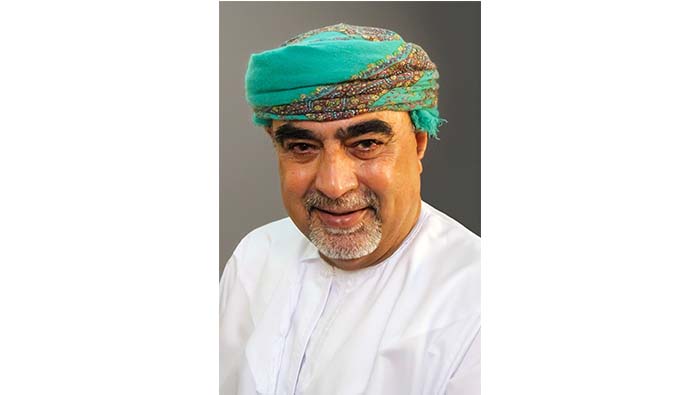
True humanity is measured by selfless devotion to saving lives and by the ability to build bridges between cultures without conditions or prejudice. In the history of modern civilian healthcare in the Sultanate of Oman, few names embody this noble ideal more completely than Dr. William Wells Thoms. Although the family name was originally Thoms, Omanis affectionately transformed it into “Tomas,” and generations came to know him simply as “Doktor Tomas” — a name that remains deeply embedded in the country’s collective memory to this day.
For more than three decades, Dr. Tomas dedicated his life to serving the people of Oman. His legacy stands today as a remarkable testament to the nobility of medicine. Despite working under the umbrella of a Christian missionary institution, he became known for his profound respect for Omani society, its Islamic faith, and its deeply rooted traditions. He remained committed to the ethics of healing and compassion rather than any attempt at religious conversion.
Dr. Tomas was born in Bahrain in 1903 into a family of pioneering physicians and grew up witnessing the difficult medical realities of the Gulf region. After losing his parents while still very young, he returned to the United States to pursue medical studies at the University of Michigan Medical School. Yet instead of pursuing a prosperous career in America, he chose to return to the Gulf — the region he considered home. In order to deepen his connection with Arab society, he spent time in Basra, Iraq, where he mastered the Arabic language and immersed himself in local customs and culture.
Among the experiences that profoundly shaped him were the scenes of leprosy sufferers living on the outskirts of old Muscat. Early American missionary reports described heartbreaking scenes of patients sitting along the road between Muscat and Sidab, surviving on alms while passersby avoided them out of fear of contagion. These scenes left a deep impression on the young Tomas. Rather than recoiling from such suffering, he developed an enduring sense of compassion that would later inspire him to dedicate his life to treating the sick, the poor, and the socially marginalized.
In 1939, Dr. Tomas arrived in Oman to lead the mission hospital in Muscat and Muttrah as its chief surgeon. Thanks to his upbringing in the Gulf, he possessed a rare understanding of local culture and society. He had also known Sultan since childhood, a relationship that helped foster mutual trust between the American physician, the Omani leadership, and the wider community.
Historical accounts also reveal the remarkable respect that developed between Dr. Tomas and Oman’s religious leadership. In Christians in Oman, author Ray F. Skinner recounts Tomas’s first meeting with Imam Muhammad bin Abdullah al-Khalili in Rustaq in 1940. The Imam welcomed the visitors with traditional Omani hospitality — coffee, halwa, and rose water — before asking why they had left their homeland to work in Muscat. Tomas and his companions explained that they had come in obedience to the teachings of Christ to heal the sick and serve humanity. When they affirmed their belief in one God, Imam al-Khalili replied: “You are not idolaters or kafirs; you are People of the Book. We believe you are mistaken in some of your doctrines, but we respect you because you fear God, the Praised and Exalted One. Therefore, you may proceed safely in our land. May God grant you skill and wisdom to heal the sick.”
That encounter marked the beginning of a long and respectful relationship between the American physician and one of Oman’s most revered spiritual leaders.
When Dr. Tomas began his work, Oman possessed almost no modern medical infrastructure. Assisted by his wife, Beth Scudder, who oversaw operations and administration, he transformed rudimentary clinics into pioneering healthcare institutions. During the Second World War, when international supply lines were severely disrupted, he shouldered the burden of emergency healthcare almost single-handedly as the only resident surgeon in Oman.
He became particularly renowned as an ophthalmic surgeon, restoring sight to thousands suffering from cataracts and trachoma. He also played a central role in expanding Al Rahma Hospital in Muttrah and establishing specialised wards for leprosy, tuberculosis, and other infectious diseases. His work extended far beyond Muscat. When patients could not travel to the coast, Dr. Tomas loaded his medical equipment onto camels and donkeys and undertook arduous journeys into Oman’s mountains, deserts, and remote villages to treat tribesmen, villagers, and Bedouin communities.
By the 1960s, the hospital network under his medical and administrative supervision was treating more than 90,000 patients annually, becoming the second-largest provider of healthcare in Oman after the Sultan’s Armed Forces.
Despite the immense humanitarian respect that “Doktor Tomas” earned in Oman, the presence of foreign medical missions in the Gulf cannot be entirely separated from the broader missionary context of that historical period. Omani researcher Dr. Nasser Hammad Al-Azri noted in his academic study, Sent to Explore, Conquer and Heal, published in Sultan Qaboos University Medical Journal, that American evangelical missions regarded medicine as an effective gateway into Arabian societies after recognising the difficulty of direct religious conversion in conservative Muslim communities. In this context, “healing bodies” was often viewed as a pathway toward “healing souls.”
The study explains that the American Arabian Mission began operating in Oman in 1893 and that medicine became central to establishing its presence within society, particularly among the poor, the sick, and those suffering from socially stigmatised illnesses such as leprosy. Yet while the missions may not have achieved the religious conversions they had hoped for, their humanitarian medical services succeeded in winning the trust and affection of many Omanis who saw these physicians living among them, sharing their hardships, and treating their suffering with sincerity.
Oman’s experience ultimately demonstrated that attempts at proselytisation achieved little lasting success, as Omani society remained firmly attached to its Islamic faith and cultural identity. What endured instead was the humanitarian and medical legacy that helped introduce modern healthcare and alleviate the suffering of thousands at a time when the country possessed few medical resources. Perhaps this is why Omanis continued to remember “Doktor Tomas” first and foremost as a compassionate physician and noble human being.
What elevated Dr. Tomas to near-legendary status in Omani memory was his remarkable moral clarity. Although he worked within a missionary framework, he firmly believed that a physician’s duty was to heal and to uphold compassion — not to exploit vulnerability for religious gain. At a time when some missionary organizations elsewhere faced criticism for linking humanitarian aid with evangelisation, Dr. Tomas drew a strict ethical line between medicine and proselytisation.
He showed profound respect for Islam and for Omani traditions, believing that genuine humanitarianism resided in sincere service and compassion rather than religious propaganda. He treated his patients with extraordinary dignity and focused entirely on relieving their suffering. Because he never sought to undermine the faith or identity of those he treated, Omanis came to regard him not as a foreign missionary with hidden motives, but as a true hakim — a wise and honorable healer.
Dr. Tomas and his wife retired in 1970, just as modern Oman was entering the dawn of its renaissance. By then, he had spent nearly all his personal savings caring for his patients. He died on October 17, 1971, poor in wealth but immensely rich in the affection of an entire nation. He chose to be buried in Muscat, the land he had come to love.
Inscribed on his gravestone is a biblical phrase that perfectly encapsulated his philosophy of life: “Such as I have give I thee.”
The quotation originates from a verse that begins, “Silver and gold have I none; but such as I have give I thee.” In many ways, Dr. Tomas lived those words literally. He chose not to pursue fortune or material wealth, but instead gave the most valuable thing he possessed — his medical knowledge, surgical skill, and compassionate humanity — freely to the people of Oman.
More than half a century after his death, the legacy of “Doktor Tomas” remains alive in Omani memory, a timeless reminder that the noblest form of medicine transcends borders, languages, religions, and politics
Sources & References
* Dickason, David G. Faith, Hope, and Love: The Hakeem’s Journey. Published by Hope College.
* Al Dakhtar Tomas — cinematic documentary produced by the Ministry of Information, Sultanate of Oman.
* Historical archives of The Arabian Mission and the Reformed Church in America (RCA).
* Heritage and institutional records of Al Amana Centre and the American Mission Hospital legacy archives in Oman and the Gulf region.
* Skinner, Ray F. Christians in Oman.
* Cantine, Elizabeth G. “The Lepers in Muscat,” Neglected Arabia, Issue 72, January–March 1910.
* Archival interview and feature published in the “Ashreaa” supplement of Al Watan newspaper, 11 February 2018.
* Al-Azri, Nasser Hammad. Sent to Explore, Conquer and Heal: History of the Evolution of Biomedicine in Oman during the 19th Century, published in Sultan Qaboos University Medical Journal, 2011