Friday 16 / October / 2026
NEW DELHI: The Comprehensive Economic Partnership Agreement (CEPA) between India and Oman officially came into forcerecently, granting tariff-free access to the majority of Indian exports and strengthening trade links between South Asia, the Gulf, and East Africa.
"From today, India will secure duty-free access on 98% of Oman's tariff lines, covering over 99% of India's exports to Oman," Goyal said. "As we speak more than 10 consignments are being shipped availing preferential duty access in Oman from different parts of India."
Goyal noted that, as PM Narendra Modi had said in Muscat, the CEPA is the blueprint of our shared future, and that blueprint is already taking shape.
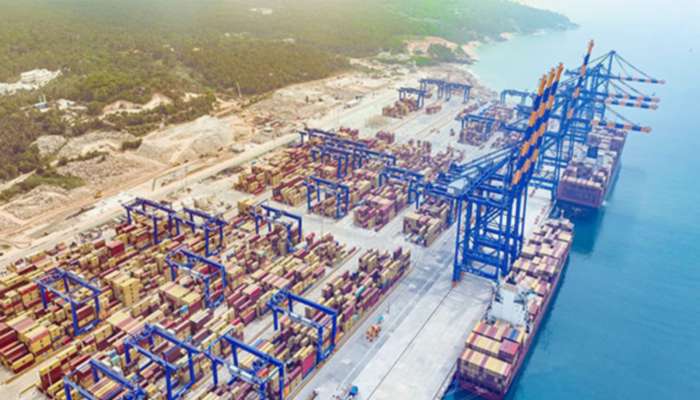
Oman, he said, is more than a market is a gateway to the wider Gulf Cooperation Council GCC countries of the Middle East and East Africa and the Indian Ocean economy through its ports at Sohar, Duqm and Salalah.
"We are also looking forward to welcoming products from Oman, which are required in the Indian ecosystem and which will benefit our consumers, our business," Goyal said noting that dates from Oman are considered "very special" and the "best in the world."
The Union Minister said workers, MSMEs and exporters in sectors like textiles, sportswear, gem and jewellery, pharma, medical devices, engineering, sports goods, agri products, meat, leather, plastics, automobiles and marine products will now "step onto a preferential access against our competitors in Omani Market."
Oman has also committed to lifting its decades-old ban on exporting unpolished marble, allowing craftsmen in Rajasthan and Andhra Pradesh to source raw material directly.
Beyond trade in goods, the agreement contains substantial commitments in services and mobility. It provides enhanced mobility provisions for Indian professionals, including temporary stay commitments for intra-corporate transferees, contractual service suppliers, business visitors and independent professionals.
For healthcare, Goyal highlighted a fast-track approval route: "Indian generic medicines approved by the USFDA, EMA, or UK MHRA will now receive marketing authorization in Oman within 90 days, meaning Omani patients get affordable Indian medicines faster."
The CEPA is part of India's broader trade push. Goyal noted it is "part of India's nine free trade agreements finalized in the last three and a half years, which cover 38 developed nations" and secure preferential access for goods and services across nearly two-thirds of global trade. The government's export target is "Two trillion of exports five years from now."
India and Oman have witnessed steady growth in bilateral trade over recent years. India imported USD 7.2 billion worth of goods from Oman in the fiscal year 2026, dominated by crude oil (USD 1.6 billion), liquefied natural gas (USD 1.2 billion), and fertilizers (USD 843 million).
To get there, negotiations are underway with Israel, Chile, Canada and the six-nation GCC bloc. "Oman is a gateway for many other markets including the Gulf, Asia and Africa," Goyal said.
Under the agreement, nearly 99 percent of Indian exports by value will enjoy immediate zero-duty access to the Omani market, covering more than 98 percent of Oman’s tariff lines. The pact is expected to significantly enhance opportunities for Indian exporters across a range of sectors.
Key Omani logistics hubs, including Port of Sohar, Port of Duqm, and Port of Salalah, are expected to provide Indian exporters with improved access to regional markets.
The agreement gains additional importance amid ongoing geopolitical tensions in West Asia. Unlike many Gulf countries that rely heavily on shipping through the Strait of Hormuz, much of Oman’s coastline lies outside the Strait, along the Arabian Sea and the Sea of Oman. Trade experts note that ports such as Salalah and Duqm can continue operating even if maritime traffic through the Strait faces disruptions.
The agreement is also expected to support labour-intensive Indian industries, including gems and jewellery, textiles, leather products, footwear, marine products, engineering goods, processed food, and pharmaceuticals.
India has agreed to liberalize tariffs on nearly 78 percent of tariff lines, covering close to 95 percent of imports from Oman by value, while maintaining protections for sensitive sectors. Goyal said both countries have also agreed to provide preferential employment opportunities for Indian workers in investments made by Indian companies in Oman, subject to local regulations.
Meanwhile, Goyal stated that most elements of the first phase of the proposed India–US bilateral trade agreement have been finalized, with only minor issues remaining under discussion.