Saturday 26 / September / 2026
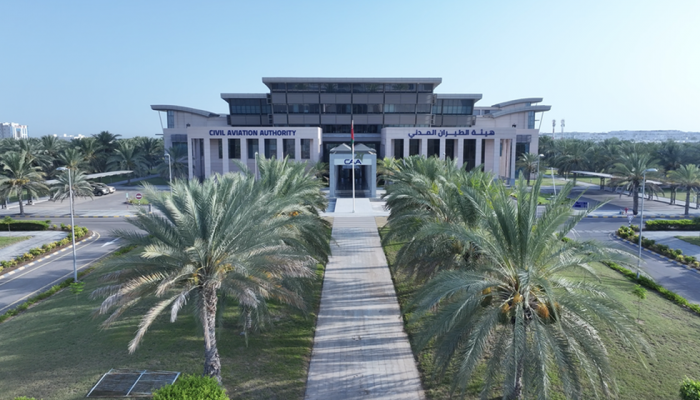
Muscat: The Civil Aviation Authority (CAA) is continuing its efforts to promote environmental sustainability in the aviation sector and achieve a balance between economic growth and environmental protection, in line with global trends and Oman’s ambitions to enhance the competitiveness of its aviation industry at the regional and international levels.
Khaled bin Hilal Al-Toubi, Director of the Civil Aviation Environmental Protection Department at the CAA, said the National Aviation Strategy 2040 places environmental sustainability at the heart of the sector’s future development.
The strategy seeks to strengthen the legislative framework governing aviation, covering safety, security, environmental protection and aviation economics, while promoting compliance with international environmental standards.
Al-Toubi explained that the strategy also includes an environmental sustainability programme for air carriers aimed at enhancing environmental compliance and encouraging the adoption of innovative solutions within the air transport sector.
He stressed that the authority is committed to strengthening the aviation environmental protection system through the development of regulatory and legislative frameworks, improving environmental performance across the sector and supporting national initiatives to reduce carbon emissions.
These efforts include expanding the use of clean technologies and sustainable aviation fuel (SAF), contributing to Oman’s transition toward a low-carbon economy while enhancing the aviation sector’s competitiveness.
According to Al-Toubi, the authority implements and monitors an integrated framework of environmental legislation and regulations governing aviation activities. Periodic monitoring and inspection programmes are conducted for airlines and airports to assess environmental performance, while carbon emissions generated by aviation operations are continuously monitored.
The authority also oversees the implementation of the Carbon Offsetting and Reduction Scheme for International Aviation (CORSIA) requirements and verifies environmental reports submitted by airlines, helping to enhance transparency and strengthen environmental governance within the sector.
He noted that these initiatives reflect the authority’s commitment to supporting national sustainability objectives and ensuring that the rapid growth of the aviation industry remains aligned with environmental protection goals.
The CAA has intensified efforts to reduce the environmental impact of both domestic and international civil aviation activities as part of its contribution to Oman Vision 2040, the Sultanate’s goal of achieving net-zero emissions by 2050 and the long-term environmental objectives of the International Civil Aviation Organization (ICAO).
Among the authority’s key sustainability initiatives are projects focused on reducing aviation-related emissions, assessing the most effective mitigation options from both environmental and economic perspectives, managing aircraft and airport noise, improving air quality and strengthening the aviation sector’s resilience to climate change.
The authority is also developing regulations and legislation aimed at enhancing environmental protection across the aviation industry.
In 2023, Oman submitted its National Action Plan for Carbon Offsetting and Reduction Scheme for International Aviation (CORSIA). The plan outlines projected air traffic growth through 2050, expected emissions from international aviation activities and a range of mitigation measures based on ICAO recommendations, including technical improvements, operational enhancements and market-based mechanisms such as CORSIA.
The Sultanate intends to update the action plan periodically in cooperation with local and international stakeholders to ensure alignment with evolving global best practices and long-term emissions reduction targets.
Oman’s approach to sustainable aviation is based on four key pillars: technological development, improved operational efficiency, expanded use of sustainable aviation fuel and compliance with international environmental mechanisms.
As part of efforts to reduce emissions through technological innovation, national airlines continue to modernise their fleets by replacing older aircraft with more fuel-efficient models equipped with advanced engines and lightweight materials.
These upgrades are expected to improve operational efficiency while lowering carbon emissions.
Operational efficiency measures are also playing an important role in reducing fuel consumption. Airlines are implementing internationally recognised procedures, including optimized take-off and landing operations and single-engine taxiing after landing, which help lower fuel use without requiring significant capital investment.
In parallel, Oman has enhanced its air traffic management systems through the adoption of advanced communications, navigation and surveillance technologies.
These improvements have increased airspace efficiency, improved traffic flow and contributed to lower fuel consumption and emissions.
The Sultanate is also increasing its focus on sustainable and low-carbon aviation fuels. Efforts are underway to explore domestic production opportunities, evaluate potential challenges and develop policies that support wider adoption of sustainable fuels.
To accelerate these efforts, the Civil Aviation Authority established a national working group on sustainable and low-carbon aviation fuel in 2024. The group includes representatives from government agencies, airlines, airports, fuel producers, universities and research institutions.
The working group is tasked with developing a comprehensive national framework for sustainable aviation fuel, including policy formulation, market analysis, investment promotion, public-private partnerships, airport readiness assessments, economic and social impact studies and capacity-building initiatives.
Several companies in Oman are already pursuing projects aimed at producing sustainable aviation fuel using a range of technologies and feedstocks, including waste materials, organic resources, agricultural crops, hydrogen and captured carbon dioxide.
The authority is also working closely with relevant stakeholders to maximize the economic and environmental benefits of CORSIA by supporting the development of national projects capable of generating carbon credits, thereby creating additional opportunities for environmental and economic gains.
Regarding airport environmental management, the authority said it has expanded environmental inspection programmes, introduced environmental performance monitoring systems and is developing a comprehensive regulatory framework to further strengthen environmental management practices at airports across the Sultanate.
These efforts underscore Oman’s commitment to building a modern, sustainable aviation sector that supports economic growth while contributing to national and global climate objectives.