Saturday 24 / October / 2026
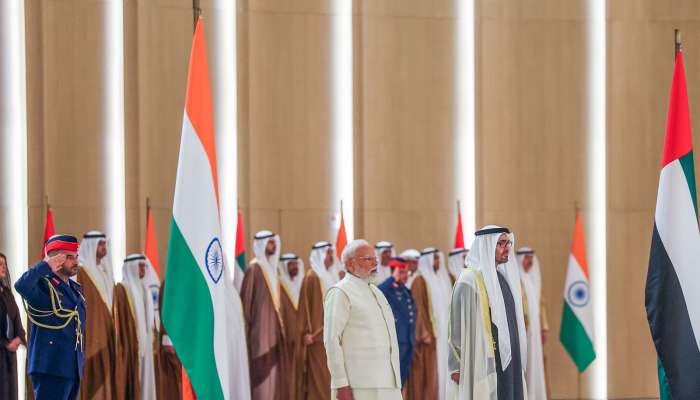
New Delhi: As India charts its path towards becoming a developed economy by 2047, the United Arab Emirates has emerged as one of New Delhi’s most significant strategic partners. The growing relationship reflects India's evolving foreign policy priorities, which increasingly focus on economic diplomacy, supply-chain resilience, energy security and regional connectivity.
Over the past decade, India and the UAE have transformed their relationship from a traditional trade partnership into a multifaceted strategic engagement. Today, the UAE serves not only as a major trading partner but also as a vital gateway linking India with markets across the Middle East, Africa and Europe.
The partnership gained further momentum in May 2026 when both countries signed a new strategic cooperation agreement covering advanced technology, innovation, industrial development, maritime security and information sharing. The agreement underscores a shared vision to expand collaboration in sectors expected to drive future economic growth and technological advancement.
Energy security remains a cornerstone of the relationship. As one of the world's fastest-growing major economies, India requires stable and diversified energy supplies to sustain its development ambitions. The UAE's strategic petroleum infrastructure, particularly the Fujairah energy hub, provides India with an important platform for crude storage and energy logistics outside the Strait of Hormuz. This arrangement enhances India's ability to withstand market disruptions and geopolitical uncertainties.
The UAE also occupies a pivotal position in India's broader connectivity strategy. New Delhi strongly supports the India-Middle East-Europe Economic Corridor (IMEC), an ambitious initiative designed to establish efficient trade and transport links connecting Asia, the Gulf and Europe. Given its world-class ports, logistics facilities and transportation networks, the UAE is expected to play a central role in the corridor's success.
Beyond bilateral cooperation, both nations are active participants in emerging regional frameworks such as I2U2, which includes India, the UAE, Israel and the United States. The grouping seeks to promote collaboration in infrastructure, food security, clean energy, technology and investment.
What makes the India-UAE partnership particularly noteworthy is its pragmatic nature. Rather than being shaped by traditional geopolitical alliances, it is driven by mutual economic interests and shared development goals.
As global economic centres continue to shift and supply chains are reconfigured, the India-UAE partnership is poised to become an increasingly important pillar of regional prosperity, strengthening economic connectivity between South Asia and the Middle East while supporting the long-term ambitions of both nations.