Tuesday 06 / October / 2026
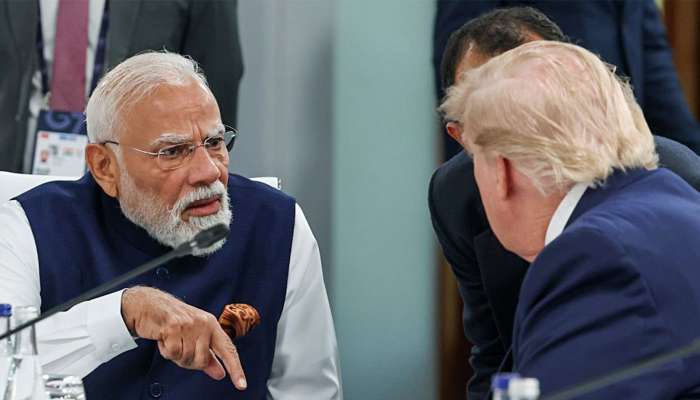
New Delhi: When Indian Prime Minister Narendra Modi and US President Donald Trump meet on the sides of the G7 summit, they will do so as two of the world's most prominent nationalist leaders. Both command strong domestic support and have reshaped the political landscapes of their respective countries, yet their approaches to governance and international engagement differ significantly.
Since taking office in 2014, Modi has sought to position India as a rising global power through a foreign policy centered on economic growth, strategic autonomy and deeper international partnerships. Over the past decade, New Delhi has expanded its engagement with the United States, Europe, Gulf nations and Indo-Pacific partners while maintaining a relatively consistent set of long-term objectives.
India's emphasis on policy continuity has contributed to its growing reputation as a predictable international actor. While differences occasionally emerge with partners, India's broader strategic goals have remained clear, allowing governments, investors and institutions to plan around a stable framework of engagement.
This consistency has strengthened India's diplomatic standing. Countries engaging with New Delhi generally understand its priorities: expanding economic opportunities, enhancing national security and increasing India's influence in global affairs. These goals have been pursued through a steady and long-term approach.
Trump's leadership style, by contrast, has often been characterized by a willingness to challenge established norms and disrupt traditional policy frameworks. Supporters argue that this approach allows him to respond quickly to changing circumstances and negotiate from a position of strength. Critics contend that it can create uncertainty among allies and international partners.
Throughout his political career, Trump has frequently adopted a transactional approach to diplomacy, emphasizing outcomes and burden-sharing while questioning longstanding assumptions about alliances and trade relationships. His policy positions have at times evolved rapidly, reflecting changing political, economic and strategic considerations.
The difference between the two leaders highlights a broader debate in international affairs: whether stability and predictability or flexibility and disruption are more effective in navigating an increasingly complex world.
For many governments, continuity remains an important factor in building long-term partnerships. Diplomatic agreements, trade arrangements and security cooperation often depend on confidence that commitments made today will endure into the future.
India has increasingly presented itself as a country capable of balancing competing geopolitical interests while maintaining productive relations with a diverse range of partners. This approach has allowed New Delhi to strengthen ties across multiple regions without becoming overly dependent on any single bloc.
At the same time, the United States under Trump continues to wield unmatched economic, military and diplomatic influence, even as allies and competitors adapt to a more unconventional style of American leadership.
As Modi and Trump meet at the G7 summit, they represent two distinct models of leadership. One places a premium on strategic continuity and gradual advancement of national interests; the other emphasizes flexibility, disruption and deal-making as tools of statecraft.
In an era marked by geopolitical uncertainty, economic competition and shifting alliances, the effectiveness of these contrasting approaches will remain closely watched by governments, businesses and investors around the world.