Friday 16 / October / 2026
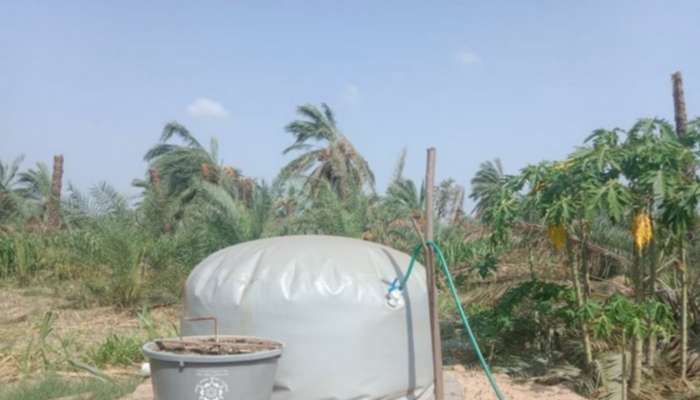
New Delhi: Japan and India are set to establish a new framework to promote vehicles powered by biogas, an environmentally friendly fuel derived from organic waste such as cow dung. The initiative aims to significantly expand India's biogas production capacity by increasing the number of methane-generation plants for compressed natural gas (CNG) vehicles to 1,000.
The agreement will be formalized through a memorandum of understanding (MoU) during Japanese Prime Minister Sanae Takaichi's three-day visit to India beginning Wednesday. Takaichi is scheduled to hold talks with Indian Prime Minister Narendra Modi in New Delhi on Thursday. The summit was originally planned for Guwahati in Assam but was later moved to the Indian capital at New Delhi's request.
A key participant in the initiative is Suzuki Motor, which dominates India's passenger vehicle market. The company has already begun producing biogas in India with support from Japanese government subsidies aimed at developing economies. Suzuki is also promoting CNG vehicles, which now account for more than one-fifth of new vehicle sales in India.
For India, the initiative supports efforts to strengthen energy security. Despite being the world's third-largest energy consumer after China and the United States, India remains heavily dependent on imported crude oil. Expanding domestic biogas production could help reduce that reliance while supporting cleaner transportation.
The visit marks Takaichi's first trip to India since taking office in October 2025 and reflects the growing strategic partnership between the two countries. Beyond energy cooperation, both sides are expected to discuss economic security and regional stability amid concerns over China's increasing influence and uncertainty surrounding international cooperation under the administration of U.S. President Donald Trump.
According to Japanese Chief Cabinet Secretary Minoru Kihara, Tokyo seeks to deepen ties with India through enhanced cooperation in economic growth and economic security, reinforcing a strategic relationship that has become increasingly important in the Indo-Pacific region.