Saturday 19 / September / 2026
Ibra: The Environment Authority reviewed the outcomes of its work and achievements during the 2020–2025 period at a joint meeting held on Sunday in the Wilayat of Ibra, North Al Sharqiyah Governorate.
The Authority affirmed that the Sultanate of Oman continues to implement its national and international commitments in environmental protection and natural resource conservation, within the framework of Oman Environment Strategy and the objectives of Oman Vision 2040.
Attended by Mahmoud Yahya Al Dhuhli, Governor of North Al Sharqiyah, and Dr. Abdullah Ali Al Amri, Chairman of the Environment Authority, the meeting reviewed the institutional and legislative framework of the Authority.
The Authority is responsible for proposing policies and strategic plans, ensuring environmental safety, preserving ecosystems, conserving nature, protecting wildlife, assessing and monitoring climate change, as well as representing the Sultanate of Oman in international and regional forums and implementing the conventions it has joined.
The Authority confirmed that the Sultanate of Oman has joined 22 international conventions and protocols during the past phase, reflecting its commitment to international environmental action.
These agreements included the Convention on Biological Diversity, the United Nations Framework Convention on Climate Change, the Convention to Combat Desertification, and the Basel, Stockholm, and Rotterdam conventions on chemicals and waste.
The Authority pointed out the digital achievements it made across several strategic pillars, most notably the natural resources and biodiversity pillar, which saw a strategic expansion of the national network of nature reserves to reach 32 nature reserves with a total area of 17,827 square kilometers to support wildlife protection.
It also indicated that the Sultanate of Oman achieved spatial coverage indicators of 4.85 percent for terrestrial areas and 0.51 percent for marine areas, thereby exceeding national and international targets to ensure the sustainability of ecosystems.
On the investment front, the Authority confirmed that the value of investment contracts in nature reserves reached OMR44 million, achieving a financial return rate of 143 percent, reflecting the feasibility of the circular economy in protected areas.
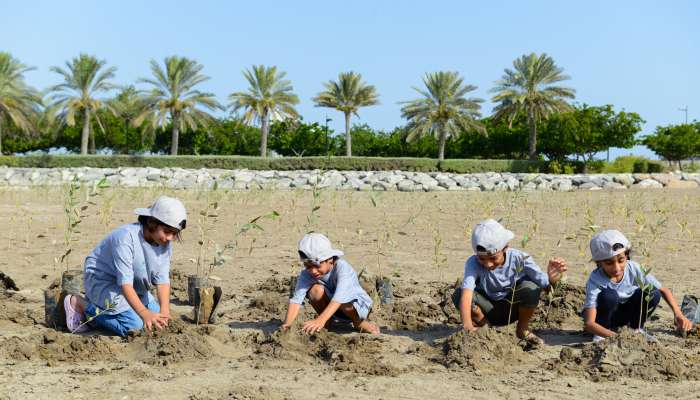
In the vegetation cover and desertification control pillar, the Authority explained that it succeeded in implementing the initiative to plant 10 million trees for the 2020–2025 period, achieving a qualitative leap by recording 72,071,551 trees planted and cultivated across various governorates of the Sultanate of Oman, exceeding the initial goals of the initiative.
The flora planted by the Authority included approximately 11,386,391 mangrove seedlings and 856,142 wild trees, along with the execution of 1,325 field campaigns, the distribution of more than 652,000 seedlings, and the establishment of 47 nurseries to support the protection of biodiversity.
This was reflected environmentally and climatically by reducing carbon dioxide emissions by 108,520 tonnes annually, thereby supporting efforts to mitigate the effects of climate change and reach the 2050 net-zero targets.
In the air quality, environmental media, and environmental compliance pillar, the Authority recorded a remarkable increase in environmental monitoring and compliance, executing 53,144 inspection visits with a compliance rate of 91.3 percent, compared to 18,564 visits in 2021.
The air quality rate at monitoring stations reached 98 percent, while achieving a 100 percent rate in safe waste disposal.
In the field of waste management and recycling, 1.77 million tons of waste were collected, with a recycling rate of 39 percent, by utilising more than 85 resources through converting waste into valuable resources.
Regarding the climate change pillar, the Authority confirmed that the Sultanate of Oman continued its national efforts to reduce emissions and support the green economy. Within the framework of the “Blue Carbon” project, 100 million mangrove trees were cultivated to enhance natural carbon sinks, and the amount of carbon absorbed reached 14 million tons of CO2. This is in addition to the decline of current emissions to 94.7 million tons, while the proportion of green investment rose to 27 percent compared to 3 percent previously. Furthermore, the National Climate Platform, the National Net-Zero Program, and the Net-Zero Lab were launched to manage and enable comprehensive climate action, paving the way to achieve net-zero by 2050.
The Environment Authority mentioned in the international leadership and governance pillar that the Sultanate of Oman obtained several advanced international rankings, including first place Arab-wide and second globally in the Numbeo 2025 Global Pollution Index, 55th globally in the Environmental Performance Index (ranking second in the Middle East), and sixth globally in the National Cybersecurity Index.
The Authority also obtained the ISO 9001:2015 certification for its quality management system and achieved 91 percent in the digital readiness assessment.
The Authority reviewed its future targets for 2026–2040, outlining quantitative indicators for the 11th Five-Year Plan 2026–2040 that aim to reach 90 percent in the quality levels of air, soil, and the marine environment, as well as the environmental compliance rate. It also targets an annual growth of 5 percent in nature reserve revenues and a 3 percent growth in private environmental investment.
At the conclusion of the meeting, the Authority emphasised that achieving the national vision is based on the principles of integration, sustainability, and shared responsibility, which require active and continuous partnerships between the government and private sectors and civil society to arrive at a sustainable environment protected by all. -ONA