Wednesday 14 / October / 2026
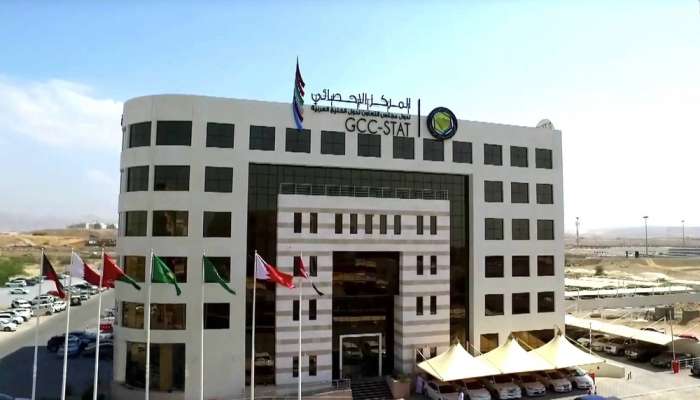
Muscat: A report issued by the GCC Statistical Centre (GCC-Stat) on inflation rates for 2025 showed that price levels remained stable across the GCC countries. The overall inflation rate reached 1.8% in 2025, compared with 1.6% in 2024, remaining below the 2% threshold for the second consecutive year. This reflects the effectiveness of economic policies in containing inflationary pressures and maintaining price stability.
The report highlighted that the GCC inflation rate remains among the lowest globally. At 1.8%, it was lower than the inflation rates recorded in emerging market and developing economies at 5.3%, the global average at 4.2%, Japan at 3.2%, the United States at 2.6%, both the European Union and advanced economies at 2.5%, and the euro area at 2.1%.
The report also indicated that inflation rates across the GCC countries remained broadly aligned. Housing together with miscellaneous goods and services constituted the main drivers of GCC inflation in 2025, jointly accounting for approximately 73% of overall inflation.
At the level of the main Consumer Price Index divisions, miscellaneous goods and services recorded the highest inflation rate at 5.4%, followed by housing at 4.0%, recreation and culture at 2.0%, restaurants and hotels at 1.6%, food and beverages at 1.2%, education at 1.0%, tobacco at 0.6%, and clothing and footwear at 0.4%. Meanwhile, health, communication, and furnishings and household equipment recorded no annual change at 0.0%, while transport registered a decline of 0.2%.
The report reviewed the evolution of GCC inflation during the period 2020–2025, showing that inflation increased from 1.5% in 2020 to 2.4% in 2021, peaked at 3.2% in 2022, then eased to 2.3% in 2023 and 1.6% in 2024, before edging up slightly to 1.8% in 2025, reflecting relative stability compared with global inflation developments.
Regarding the GCC's major trading partners, the report showed that inflation rates, ranked from highest to lowest, were as follows: Brazil 5.0%, the United Kingdom 3.9%, Japan 3.2%, India 2.8%, the United States 2.6%, Germany 2.2%, the Republic of Korea 2.1%, Italy 1.5%, France 0.9%, while the People’s Republic of China recorded the lowest inflation rate at 0.0%.
The report further noted that the 2.1% decline in global food and beverage prices helped ease imported inflationary pressures. However, the 15.2% increase in natural gas prices, together with ongoing geopolitical tensions, continues to pose risks that warrant close monitoring.
In conclusion, the report emphasised that the close convergence of inflation rates across the GCC countries, together with their stability below 2%, provides a favorable environment for advancing Gulf economic and monetary integration. It also offers fiscal space for member states to continue implementing economic reforms and development spending, while underscoring the importance of harmonising statistical methodologies and strengthening policy preparedness to address potential future external shocks.