Wednesday 16 / September / 2026
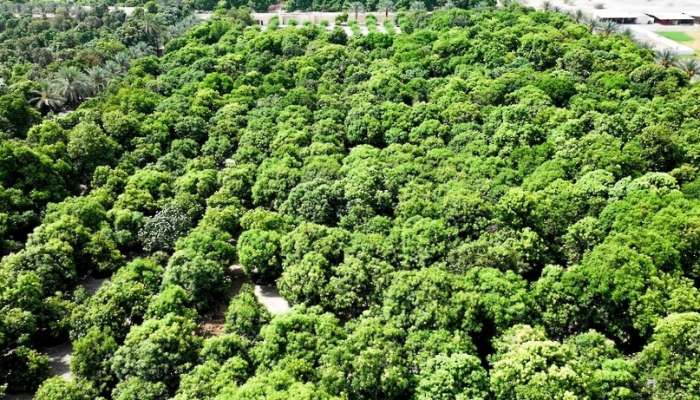
Sohar-- Performance indicators for 2025 confirm continuous growth across various productive sectors in North Al Batinah Governorate, supported by a package of strategic projects, investment opportunities, infrastructure, and logistical services that contribute to raising production efficiency, developing food industries, and increasing exports.
Eng. Nasser Ali Al Marshoodi, Director General of the Directorate General of Agriculture, Fisheries and Water Resources in North Al Batinah Governorate, said that the governorate possesses a broad agricultural production base, as the cultivated area by the end of 2025 reached approximately 99,676 feddans, compared to 94,242 feddans in the previous year, achieving a growth of 4.35 percent, alongside 61 agricultural nurseries and two agricultural research stations.
He added that vegetable production reached nearly 860,000 tonnes, fruit production exceeded 87,000 tonnes, in addition to more than 225,000 tonnes of fodder crops.
He explained that the Ministry continued to implement agricultural support programs that contributed to raising productivity and improving crop quality through expanding the cultivation of improved Omani wheat varieties and establishing model fields for mango, lemon, guava, fig, and sidr crops, among others. This was alongside implementing intensive preventive programs that contributed to reducing red palm weevil infestations by 36.71 percent, and executing aerial spraying programs to combat Dubas bugs for the autumn and spring generations, covering 48 villages over an area exceeding 818 feddans.
He pointed out that the livestock sector represents a key pillar in the governorate's production system, as the total number of livestock reached approximately 680,000 head, with an annual production reaching 500,000 litres of milk and 4 million poultry, supported by an integrated network of veterinary services including government and private clinics, laboratories, and veterinary pharmacies, in addition to grazing sites and a mobile clinic.
He indicated that vaccinating more than 841,000 animals during 2025 contributed to lowering disease rates, explaining that the governorate includes 13,218 fishermen, 5,431 fishing boats, 6 ports, and 8 fish markets, alongside 214 fish marketing outlets and 31 investment projects, enhancing the value chain for the fisheries sector.
He affirmed that agricultural development in the governorate relies on an advanced water infrastructure that includes 5 recharge and protection dams, in addition to 17 community partnership dams, cloud seeding stations, a wide network of hydrometric monitoring stations, groundwater monitoring wells, as well as 993 aflaj (traditional irrigation channels), while implementation of new water resource projects continues.
He stated that the governorate possesses an integrated food safety control system comprising 6 quarantine and food safety offices, 183 food establishments, 71 food warehouses, 27 automated bakeries, 14 water bottling plants, and 13 ice factories, in addition to testing laboratories, thereby enhancing product quality and the safety of food imports.
He noted that 50 opportunities were offered within food security projects during 2025 via the "Tatweer" platform with an investment value of RO 307 million across an area of 1,527 feddans, expected to provide approximately 200 job opportunities, stressing that these projects cover various plant, animal, fisheries, and water sectors.
He explained that Saham Agricultural City represents one of the most prominent future projects, established over an area of 92.3 square kilometers, including 22 square kilometers of agricultural area, taking into account integration between agricultural, residential, and service activities, thereby enhancing the model of integrated agricultural cities and supporting the achievement of Oman Vision 2040 targets.
Al Marshoodi highlighted the diversity of agricultural investments in the governorate, where banana cultivation projects emerged on an area of 150.3 feddans with an investment value of OMR 800,000 and a production capacity reaching 1,270 tonnes annually; onion projects over an area of 374 feddans with a production capacity of 2,888 tonnes; alongside onion and okra production projects across 100 feddans valued at OMR 240,000; in addition to a lemon and mango project covering 50 feddans valued at OMR 250,000; a fig project spanning 16.6 feddans with a production capacity of 31 tonnes; and potato projects over 510 feddans with a production capacity of 813 tonnes.
He added that the governorate is witnessing qualitative investments in food industries, most notably the sugar refining project represented by Oman Sugar Refinery plant, which is the first integrated megaproject of its kind in the Sultanate of Oman, constructed at Sohar Port and Freezone with an investment of OMR 150 million across an area of 20 hectares, featuring a production capacity of up to 1 million tonnes of refined sugar annually and a storage capacity of 500,000 tonnes of raw sugar and 70,000 tonnes of refined sugar, making it one of the largest industrial projects supporting food security in the Sultanate of Oman.
He also explained that Development Bank contributed to funding 319 projects in the governorate with a value exceeding RO 7.86 million, covering agricultural, livestock, fisheries, water, and food industry sectors, thereby enhancing the growth of small and medium investments in the food sector.
He pointed out that the fodder cultivation project using treated water in the Wilayat of Saham is considered a model for sustainable investment, as it is established over an area of 35 feddans expandable to 103 feddans, valued at OMR 350,000 with an annual production capacity of 1,200 tonnes and an Omanization rate reaching 96 percent. Meanwhile, the fodder cultivation and livestock breeding project in the Wilayat of A’Suwaiq, established on an area of 100 feddans valued at OMR 1.5 million with a production capacity of 1,100 tonnes, contributes to supporting red meat production and enhancing local market stability.
Al Marshoodi emphasized the role of the integrated logistics city as a fundamental pillar in supporting the growth of agricultural exports by facilitating shipment clearance procedures and elevating service efficiency through specialized inspection platforms, laboratories, and advanced round-the-clock storage facilities, contributing to accelerating export movement and ensuring product safety and quality.
He explained that plant exports exceeded 81,000 tonnes during 2025, compared to 76,000 tonnes in the previous year, achieving a growth rate of 7.89 percent and surpassing the annual target of 6 percent, amid the city's growing role in enhancing the export capacity of Omani products.
He noted the execution of an Omani sesame and fava bean cultivation project in the Wilayat of A’Suwaiq over a total area of 3 feddans—one feddan for sesame and two feddans for fava beans—with a productivity reaching approximately 500 kilograms per feddan annually, with the possibility of harvesting twice a year. He stated that the project has reached the marketing stage and the product is being introduced to local markets.
In the same context, he explained that the sugarcane cultivation project in the governorate, located in the Wilayat of Saham over an area of 30 feddans with a productivity reaching 50 tonnes per feddan, has entered the 100 percent marketing phase, with plans to enhance added value through processing the product, in addition to operating entirely on solar energy.
He added that several partnership agreements were signed, including a memorandum of understanding with Oman Sugar Refinery Company to purchase raw sugar, and another with the Oman Agriculture Development Company to utilize sugarcane waste, supporting the integration of production chains and enhancing sustainability in the agricultural sector.
Eng. Nasser Ali Al Marshoodi explained that offering 42 investment opportunities during 2026 across an area exceeding 600 feddans comes as part of expanding the investment base and attracting qualitative projects that contribute to increasing local production, diversifying agricultural activities, and supporting value chains, thereby reinforcing North Al Batinah Governorate's standing as an integrated national hub for food production in the Sultanate of Oman.