Sunday 11 / October / 2026
Omanis love their language, and rightly so. Arabic is the language of our holy book, the Quran; it lives in our poetry, our songs, and our everyday lives, and it is not something we would ever give up. But alongside this, English has steadily grown into a practical necessity.
Today, nearly 99% of university majors like engineering, medicine, nursing, economics, and many others are taught in English, giving graduates access to opportunities in both local and international industries. English is also the working language of most professional environments, particularly in the private sector. In short, a strong command of English has become essential for academic and career success, not a luxury.
Many students, especially those who graduate from public schools, find their first years at university challenging because they have to switch from studying in Arabic to studying in English.Universities try to bridge this gap with a foundation year, but the math doesn’t work in its favour: twelve years of schooling conducted mostly in Arabic, with only basic English instruction along the way, cannot be undone by a single semester or two of foundation studies. The gap is simply too wide to close in that short a time.
Much of this struggle traces back to a deep inconsistency in English education before students even reach university. Private schools generally offer a far more advanced English curriculum than public schools, starting from the earliest grades. Even though school environment and exposure play some role, the core issue is curricular: students in the same grade level, sitting for the same national milestones, are simply not being taught the same language content. And the longer this gap persists, the harder it becomes to close as students grow older, language acquisition becomes more difficult, not less.
Instead of having two different education systems that lead to very different outcomes, public schools could gradually adopt the English curriculum used in private schools. This should not be introduced all at once. It should begin with first grade and expand to the next grade each year until it reaches grade twelve. Students who start learning through this curriculum from an early age will build a strong foundation in English and graduate with much stronger language skills than many students do today.
Curriculum alone, however, won’t close the full gap. Public school students typically have far fewer opportunities to practice speaking English outside the classroom than their private school peers. Dedicating one or two periods a week specifically to spoken practice would give students the confidence and fluency that reading and grammar-focused instruction alone cannot provide, helping ensure that what they learn is retained rather than forgotten.
If students graduate high school with a genuinely advanced level of English, the traditional foundation year which is designed to teach general English essentially from scratch becomes unnecessary. In its place, universities and colleges could adopt a model similar to the LANC approach already used at Sultan Qaboos University, where students study English tailored to their specific major rather than repeating general basics they should have already mastered in school. This shift would let higher education institutions focus their resources on preparing students for the specific academic vocabulary and skills their majors demand, rather than spending a full year catching students up on fundamentals.
Unifying the English curriculum across public and private schools would mean students graduate at comparable levels regardless of which sector they came from. It would remove the anxiety around the sudden linguistic shift many face at university, and it would let students walk into their foundation year or better yet, their major-specific English programme with confidence instead of catching up. And when students are comfortable with the language their major is taught in, they are better positioned to understand the material itself, which can only translate into stronger academic performance across the board.
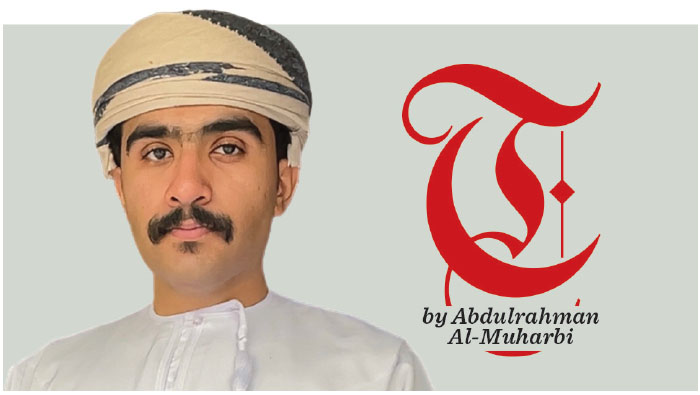
* Abdulrahman Ibrahim Al-Muharbi is a Political Science student at Sultan Qaboos University with a keen interest in public policy, international relations, and political communication. He is passionate about governance, policy analysis, and contributing to informed public discourse on contemporary political issues.