Monday 19 / October / 2026
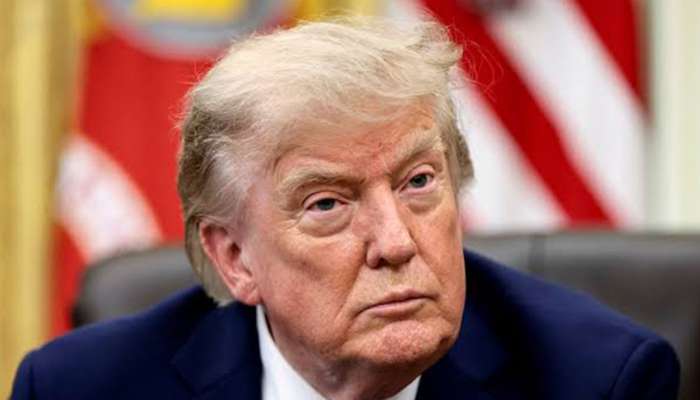
Washington, DC: United States President Donald Trump has acknowledged the constitutional prohibition against seeking a third presidential term in 2028, stating that while he would welcome another campaign, legal boundaries prevent him from doing so.
Interacting with media personnel at Joint Base Andrews in Maryland, Trump addressed direct queries regarding his potential candidacy for a third term following his current mandate.
The US President noted that despite persistent demands from his political base, the law explicitly prevents a chief executive from being elected to office more than twice.
"Everybody asks me that question, and you know that the law is very strong on that," Trump said.
Expressing his inclination towards another campaign, he added, "I'd love to run, but the law is very strong."
Trump highlighted that his supporters frequently urge him to run again, referencing an event he attended earlier in Ohio.
"I get asked by everyone, well, even tonight, they're screaming at the event, '2028!'" he stated, referring to the Patriot Games.
He further noted, "No, everybody wants me to do it, but the law is very strong."
The remarks mark one of Trump's most explicit recognitions of the constitutional barrier to a third term, even as he indicated an interest in continuing his tenure.
The statements clarify that his comments do not constitute an official announcement of a 2028 campaign, but rather an acknowledgement of the existing statutory limits.
The constitutional restriction stems from the 22nd Amendment to the United States Constitution, which states, "No person shall be elected to the office of the President more than twice."
Passed by Congress in 1947 and ratified by the states in February 1951, the amendment places a firm cap on presidential terms.
Having secured non-consecutive victories in the 2016 and 2024 presidential elections, Trump falls directly under the scope of this provision, rendering him ineligible to contest the presidency again.
Historically, the US Constitution did not mandate term limits for the executive office.
For decades, leaders observed an informal precedent established by George Washington, who stepped down after two terms.
This political convention was set aside by Franklin D. Roosevelt, who secured an unprecedented third term in 1940 and a fourth term in 1944 before passing away in office in April 1945.
In the wake of Roosevelt's extended presidency, Congress proposed the 22nd Amendment to codify the two-term limit into statutory law.