Tuesday 01 / September / 2026
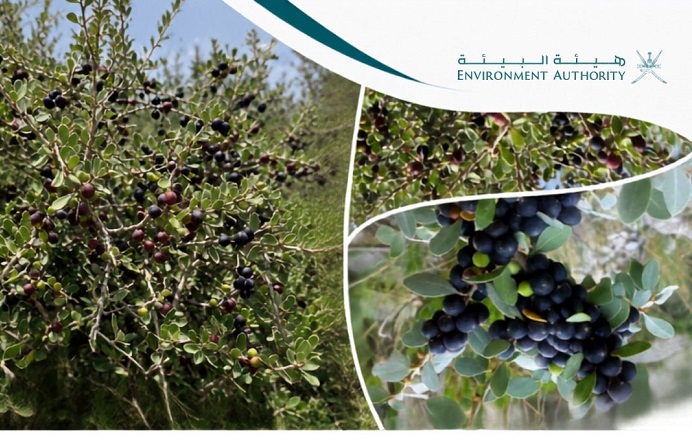
Muscat: High in the rocky landscapes of Oman’s Al Hajar Mountains, a distinctive wild tree quietly produces a seasonal fruit that has nourished mountain communities for generations.
Known locally as the Būt tree, Monotheca buxifolia is among Oman’s notable native wild plants, valued not only for its edible fruit but also for its ecological and economic importance.
The Environment Authority has highlighted the species as part of efforts to raise awareness of Oman’s rich plant diversity and encourage the conservation of native vegetation.
A tree of the highlands
The Būt tree belongs to the Sapotaceae family and grows naturally across the rocky highlands of Oman’s Eastern and Western Hajar Mountains. It is generally found at elevations above 1,000 metres, where rugged terrain and limited water make conventional agriculture challenging.
The medium-sized tree can grow to around four metres in height and is distinguished by its thorny branches, which help it survive in the harsh mountain environment.
During its flowering period, the tree produces small white to yellowish flowers that appear in clusters. These later develop into small berries that mature during the summer.
As they ripen, the fruits change colour, eventually becoming dark purple to almost black.
A fruit with a long local tradition
The Būt fruit is edible and considered nutritionally valuable. For generations, people living in Oman’s mountainous areas have collected the seasonal fruit, both for household consumption and for sale in local markets.
Its annual fruiting season provides a natural food resource in areas where farming can be difficult because of steep slopes, rocky ground and scarce water.
Researchers have also identified Monotheca buxifolia as an economically important wild fruit species, particularly for communities living in mountainous regions.
The tree therefore represents more than a component of Oman’s natural landscape. Its fruit has traditionally contributed to local livelihoods, while the species itself forms part of the ecological fabric of the Hajar Mountains.
Nature’s resilience in Oman’s mountains
The survival of the Būt tree in Oman’s rugged highlands reflects the remarkable adaptability of native vegetation.
Wild plants such as the Būt have evolved to withstand demanding environmental conditions and play an important role in maintaining mountain ecosystems. Preserving these species can help protect biodiversity while safeguarding plants that have cultural and economic value for local communities.
The Environment Authority’s awareness campaign seeks to strengthen public knowledge of native Omani plants and encourage their protection as part of the Sultanate’s natural heritage.
For mountain communities, the Būt remains a familiar seasonal gift from the landscape — a small, dark berry that connects Oman’s biodiversity, traditional knowledge and local livelihoods.