Sunday 18 / October / 2026
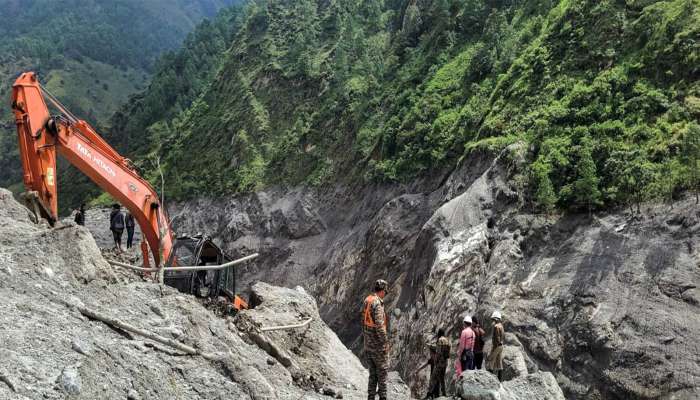
NEW DELHI: The devastating flash floods that struck Nepal in late August have once again highlighted the Himalayan nation’s vulnerability to climate-related disasters, while underscoring the importance of India’s role as a first responder and long-term development partner.
The floods destroyed roads and bridges, damaged hydropower facilities and disrupted communities across the country, leaving thousands dead or missing.
India responded swiftly, sending humanitarian supplies, essential medicines, technical teams, forensic experts and specialised equipment. By August 30, it had delivered 68.5 tonnes of relief materials in four tranches and offered the support of its National Disaster Response Force.
At Nepal’s request, India also moved to assist in restoring vital transport links, including through the construction of temporary Bailey bridges.
The rapid response offers a practical illustration of the priorities India is seeking to advance through its BRICS chairship in 2026. As leaders gather in New Delhi for the BRICS summit on September 12-13, India is positioning resilience, innovation, cooperation and sustainability as central elements of its engagement with the Global South.
Under the theme “Building for Resilience, Innovation, Cooperation and Sustainability,” India’s BRICS presidency is focusing on areas that have direct relevance for vulnerable developing countries such as Nepal, including disaster-resilient infrastructure, clean energy, connectivity, digital inclusion and development finance.
For Nepal, these are not simply diplomatic priorities. They are essential to building a safer and more prosperous economy in a country increasingly exposed to floods, landslides, earthquakes and other climate-related hazards.
A longstanding development partner
India is Nepal’s most important economic and development partner, with the relationship underpinned by an open border, extensive cultural links and longstanding connections between families, businesses, students and workers.
Indian development assistance has supported roads, railways, integrated check posts, healthcare, education and energy infrastructure in Nepal. India has also repeatedly provided emergency assistance following earthquakes, landslides and other natural disasters.
The latest flood response adds to that record while highlighting the advantages of geographic proximity and established institutional links.
India’s capabilities in areas such as hydrology, satellite monitoring, tunnel rescue, engineering and disaster management could also help Nepal strengthen its preparedness and response systems as extreme weather events become more frequent and destructive.
Energy offers major opportunity
Energy cooperation has emerged as one of the strongest pillars of India-Nepal relations.
Nepal has enormous hydropower potential, while India provides investment, transmission infrastructure and access to a large electricity market. Growing power exports to India are generating revenue for Nepal and strengthening its external position.
A landmark development has also enabled Nepal to export electricity to Bangladesh through the Indian power grid.
The trilateral arrangement demonstrates how regional connectivity can transform geographical constraints into economic opportunities. Nepal gains access to a larger market for its clean electricity, Bangladesh receives additional renewable power and India acts as the critical link connecting the two countries.
The recent floods, however, have also highlighted the need to make hydropower facilities and related infrastructure more resilient to extreme weather.
Strengthening the resilience of energy infrastructure will be increasingly important if Nepal is to expand electricity generation and exports without exposing critical assets to growing climate risks.
Connectivity beyond borders
Connectivity is another major area of India-Nepal cooperation.
Cross-border railway links, highways, integrated check posts, petroleum pipelines and improvements to customs systems are gradually reducing some of the costs associated with Nepal’s landlocked geography.
Access to Indian ports provides Nepal with an important gateway to international markets, while better transport infrastructure is helping businesses, tourists and pilgrims move more efficiently across the border.
The benefits extend beyond physical infrastructure. Digital customs systems and payment connectivity can help small businesses, students and migrant workers while further integrating the two economies.
For Nepal, improved connectivity with India is therefore not merely about transport. It is about expanding access to markets, investment, employment and regional supply chains.
Development finance
Finance will remain crucial to Nepal’s efforts to strengthen infrastructure and respond to climate-related challenges.
The New Development Bank, established by BRICS, has financed projects in areas including clean energy, transport, water, environmental protection and digital infrastructure.
India, as a founding member of both BRICS and the NDB, has consistently advocated a greater development voice for emerging and developing economies.
Although Nepal is not a BRICS member, India’s chairship provides an opportunity for neighbouring developing countries to benefit indirectly from the wider ecosystem of South-South cooperation associated with the grouping.
Technical partnerships, co-financing arrangements and cooperation with regional institutions could provide avenues for Nepal to access expertise and financing in areas aligned with its development priorities.
A neighbourhood-first approach
India’s approach is also significant because it does not require Nepal to choose an exclusive geopolitical camp.
New Delhi has combined bilateral development cooperation with regional connectivity and participation in wider multilateral institutions. Such an approach allows Kathmandu to diversify its international partnerships while remaining closely connected to the economic opportunities offered by its immediate geography.
The relationship also extends well beyond governments and major infrastructure projects.
Indian educational institutions train Nepali students, Indian hospitals provide medical treatment to Nepali citizens, and people from both countries cross the open border for work, family visits and religious purposes.
Digital payments, telemedicine and mutual recognition of skills could add further depth to these longstanding people-to-people ties.
From relief to resilience
The New Delhi BRICS summit comes at a difficult moment for Nepal, with communities still dealing with the consequences of devastating floods.
But the crisis also demonstrates what India’s approach to regional leadership can mean in practical terms.
India did not wait for a summit declaration before responding. Relief supplies, medicines and specialised teams were dispatched while emergency operations were under way. At the same time, years of cooperation in energy, connectivity, healthcare and infrastructure have created platforms for longer-term resilience.
For Nepal, the challenge now is to move from emergency response to stronger disaster preparedness and climate-resilient development.
For India, its support for Nepal provides a tangible example of the principles it is seeking to promote through BRICS.
The message from New Delhi is that Global South leadership is not only about declarations on the international stage. It is also about building resilient infrastructure, strengthening regional connectivity, expanding access to clean energy and development finance, and responding when neighbouring countries face crisis.
In that sense, India’s BRICS chairship begins close to home — with a commitment to stand beside its neighbours when they need it most.