Tuesday 15 / September / 2026
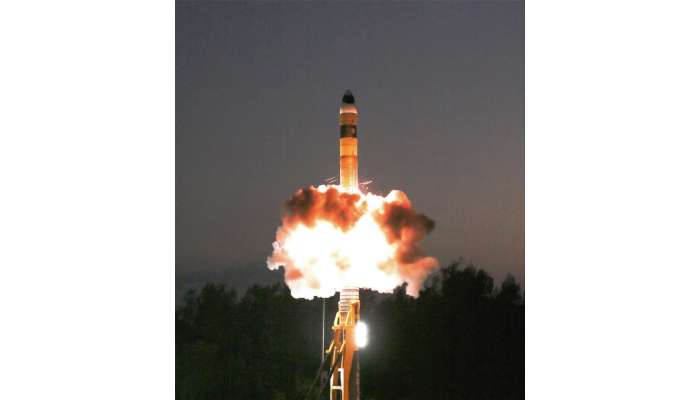
India’s recent test of the Agni-IV ballistic missile was significant not simply because another missile was launched, but because it demonstrated the country’s growing capacity to deter potential threats well beyond its disputed border.
With a range of around 4,000km, the Agni-IV can reach Beijing and other strategically important targets. But the missile itself is only part of the story. More important is what its development reveals about India’s national capabilities and how these capabilities influence New Delhi’s choices in dealing with the wider regional order.
India’s strategic autonomy is often described as a policy of not choosing sides or maintaining roughly equal distance from major powers. Neither description fully captures what New Delhi has sought to achieve.
Non-alignment, multiple partnerships and selective alignment have all featured in Indian foreign policy. They are better understood as policy instruments than as the essence of strategic autonomy. At its core, strategic autonomy is about retaining the ability to protect national interests and make independent decisions as the external environment changes.
That ability depends on more than diplomatic flexibility. A country can remain outside formal alliances and still have limited autonomy if its security depends heavily on external commitments or critical military systems supplied by a single foreign power.
The Agni-IV is important in this context. India has spent more than 15 years testing and improving the missile system, building expertise in indigenous research and development, systems integration and strategic-force operations. These capabilities provide tangible substance to India’s pursuit of strategic autonomy.
Autonomy is useful only to the extent that it expands the choices available to a country. Agni-IV does precisely that.
Beijing remains a major neighbour that India cannot simply disengage from. The unresolved border dispute and substantial bilateral trade make continued political engagement necessary.
New Delhi continues to strengthen its military capabilities, pay greater attention to the Indian Ocean and invest in technologies where excessive dependence could become a strategic vulnerability.
The more revealing aspect of India’s policy is therefore not simply its diplomatic engagement, but its efforts to reduce dependence where such dependence could constrain its strategic choices. This extends beyond the bilateral relationship to supply chains, critical technologies and the Indian Ocean.
By developing alternatives and diversifying partnerships, India is creating greater room for independent action while also opening opportunities for other countries in the region. The result could be a regional environment in which some states remain highly important, but is not the only centre of economic and strategic gravity.
For the Indo-Pacific, this may be the broader significance of India’s strategic autonomy. An India with stronger indigenous capabilities and a greater ability to withstand external pressure can cooperate with major powers without becoming dependent on them.
The Agni-IV is therefore more than a weapons system. It represents a long-term effort to build the technological and strategic capabilities needed to ensure that engagement with major powers remains a choice rather than a necessity.