Monday 28 / September / 2026
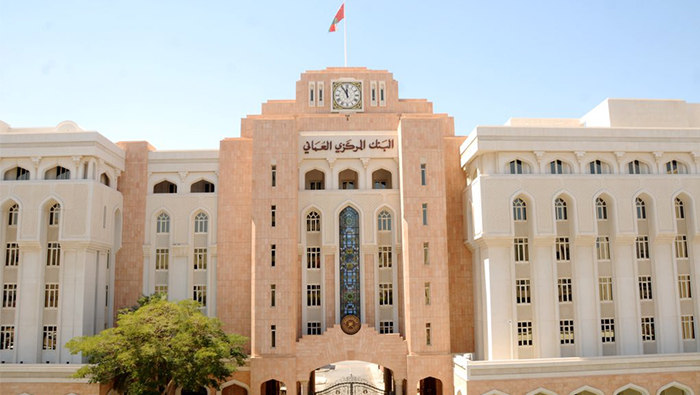
Muscat: Data issued by the Central Bank of Oman (CBO) indicated that the total deposits held with ODCs (Other Depository Corporations) reached OMR23.9 billion at the end of June 2020, increasing by 3.9 per cent from June 2019. Total private sector deposits increased by 9.6 per cent to OMR16.3 billion.
The monthly statistical bulletin issued by CBO indicated that Oman’s nominal GDP declined by 3.9 per cent during the first quarter of 2020 compared to the same three-month period of last year, according to preliminary data released by National Centre for Statistics and Information (NCSI).
The nominal contraction in the economy was driven by a 6.2 per cent decline in the non-hydrocarbon sector, mainly because of a drop in nominal GDP emanating from the non-petroleum industrial activities and services sector decreasing by 11.5 and 5.2 per cent, respectively.
On the other hand, the hydrocarbon sector inched up marginally by 0.7 per cent during the first quarter of 2020. The Omani oil price averaged $51.1 per barrel during the second quarter of 2020 which is lower by 20.6 per cent over the corresponding period of last year.
On the other hand, the average daily oil production increased by 0.4 per cent to 974,000 barrel during this period. According to the latest data released by the NCSI, the Sultanate Consumer Price Index (CPI) witnessed a year-on-year negative growth of -0.4 per cent during the first half of 2020.
The combined activities of conventional and Islamic banks provide a comprehensive picture of financial intermediation through the banking sector in Oman. The total outstanding credit extended by other depository corporations (ODCs) grew by 2.4 per cent to OMR26.3 billion at the end of June 2020. Credit to the private sector rose by 2.2 per cent to OMR23 billion. Of the total credit to the private sector, the non-financial corporate sector and the household sector (mainly under personal loans) received a share of 47.1 per cent and 44.4 per cent, respectively while the financial corporations received 5.3 per cent and other sectors the remaining 3.2 per cent.
The bulletin also stated that the total deposits held with ODCs reached OMR23.9 billion at the end of June 2020, increasing by 3.9 per cent from June 2019. Total private sector deposits increased by 9.6 per cent to OMR16.3 billion.
When looking at the sector-wise analysis of private sector deposits; the share of households was largest at 50.7 per cent, followed by non-financial corporations at 31.8 per cent, financial corporations at 15.1 per cent and the other sectors at 2.4 per cent.
The combined balance sheet of conventional banks indicates an annual growth of 1.5 per cent in total outstanding credit as on end-June 2020. Conventional banks’ credit to the private sector increased by 1 per cent to OMR19.1 billion.
Conventional banks’ overall investments in securities amounted to OMR3.9 billion. Investment in Government Development Bonds increased by 24.5 per cent over the year to OMR1.8 billion. Banks also invested OMR264.8 million in Government Treasury Bills while their investments in foreign securities stood at OMR1.1 billion at the end of June 2020. Aggregate deposits held with conventional banks increased to OMR20.4 billion in June 2020, registering a growth of 3.4 per cent over the level a year ago. Government deposits with conventional banks decreased by 9.8 per cent to OMR4.9 billion while deposits of public enterprises increased by 5.4 per cent to OMR1.1 billion.
Private sector deposits, which accounted for 68.9 per cent of total deposits with conventional banks, increased by 8.8 per cent to OMR14.1 billion.
Islamic banking entities provided financing of OMR4.1 billion at the end of June 2020, recording a growth of 7.4 per cent over that a year ago. Total deposits held with Islamic banks and windows increased by 7.2 per cent to OMR3.5 billion. The total assets of Islamic Banks and Windows stood at OMR4.9 billion and constituted about 14 per cent of the banking system’s assets as at end-June 2020.
Monetary aggregates data indicates narrow money (M1) at the end of June 2020 increased by 6 per cent to OMR5.6 billion on a year-on-year (Y-o-Y) basis. Likewise, quasi-money (Rial Omani saving and time deposits, certificates of deposit issued by banks, margin deposits and foreign currency denominated deposits) registered a significant increase of 10.4 per cent during this period. Broad money supply M2 (M1 plus quasi-money) grew by 9 per cent and stood at OMR18.8 billion.
The weighted average interest rate on RO deposits increased marginally from 1.943 per cent in June 2019 to 1.951 per cent in June 2020 while the weighted average RO lending rate dropped from 5.416 per cent to 5.381 per cent during the same period. Meanwhile, the overnight Omani Rial domestic inter-bank lending rate fell significantly to 1.570 per cent in June 2020 from 2.744 per cent a year ago, reflecting transmission of policy rate cuts by the Federal Reserve. The average Repos rate for liquidity injection by the CBO also stood lower at 0.5 per cent during June 2020 in comparison with 2.911 per cent in June 2019.