Wednesday 21 / October / 2026
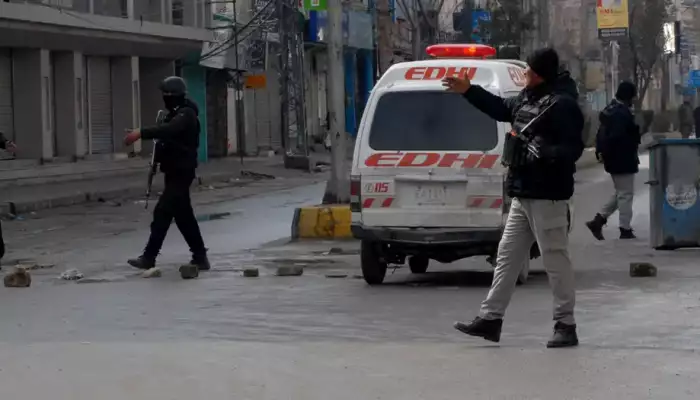
A wave of simultaneous gun attacks and suicide bombings targeting schools, banks and security installations in Pakistan's Balochistan province over the weekend has killed 50 people, mostly civilians, including women and childrenin the insurgency-hit region.
The coordinated nature of the attacks and their scale expose the enormous security threats facing the region, according to Michael Kugelman, a senior fellow for South Asia at the Atlantic Council.
"These are extremely serious and significant attacks. It was also one of the most violent days in Balochistan for quite some time," Kugelman told DW.
Sahar Baloch, a Berlin-based researcher focusing on Balochistan, echoed this view.
"These are not sporadic low-level incidents. They are widespread, coordinated assaults across the province, indicating a higher operational tempo than seen in recent years," she told DW.
Islamabad accuses India of helping BLA separatists
Pakistani security forces have since launched raids in several areas against members of the outlawed separatist Baloch Liberation Army (BLA). Officials said Monday that 177 BLA fighters had been killed.
The provincial government has also imposed restrictions on public gatherings and concealing identity, such as through face coverings.
Pakistan has said the BLA has received support from India, without providing evidence. New Delhi rejected the allegations.
The charges, nevertheless, could escalate tensions between the two nuclear-armed archrivals who engaged in their worst armed conflict in decades last May.
Local grievances and rising violence
Balochistan is the largest and poorest province in Pakistan.
The mountainous, mineral-rich region of the South Asian country has a dry desert climate and is sparsely populated.