Monday 31 / August / 2026
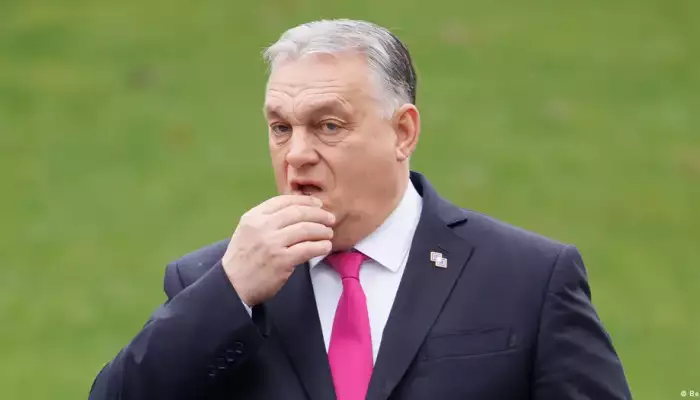
After agreeing to provide Ukraine a €90 billion ($106 billion) EU loan package, officials in Budapest said on Friday they plan to veto the deal unless Russian oil starts flowing in a pipeline to Hungary.
"As long as Ukraine blocks the Druzhba pipeline, Hungary will block the €90 billion Ukrainian war loan. We will not be pushed around!" Hungarian Prime Minister Viktor Orban wrote on Facebook.
Ukrainian officials say the oil flows through the Druzhba pipeline, which carries Russian oil across Ukraine to Hungary and Slovakia, have been disrupted since Russian attacks on Ukrainian energy infrastructure damaged it in January.
Hungarian and Slovakian politicians, however, accuse the Ukrainian leadership of blocking the resumption of supplies. Both countries rely heavily on the pipeline for their oil imports and are the most Russia-friendly governments in the European Union.
On Wednesday, Slovakian Prime Minister Robert Fico declared a state of emergency over supplies and threatened retaliatory measures against Ukraine if the pipeline was not reopened.
Hungary decries pipeline 'blackmail' ahead of election
Hungarian Foreign Minister Peter Szijjarto called the stop to oil flows in the pipeline "blackmail."
"Ukraine is blackmailing Hungary by halting oil transit in coordination with Brussels and the Hungarian opposition to create supply disruptions in Hungary and push fuel prices higher before the elections," he wrote on X.
For the first time in 16 years, Orban faces the possibility of losing a parliamentary election.
Kyiv has long called on its EU allies to stop buying Russian energy supplies as they help finance Moscow's full-scale invasion, which is about to enter its fifth year.
EU leaders, including Orban, agreed in December to provide Ukraine with up to €90 billion over two years, a decision endorsed by the European Parliament last week. The EU also exempted Hungary, Slovakia and the Czech Republic ― which have all opposed further aid for Kyiv ― from repaying the loan's borrowing costs.
Final approval by the Council of the European Union, made up of national ministers, is still required before the first funds can be disbursed, a step previously regarded as a formality.
That vote has now been postponed.
The funds are intended to cover Ukraine’s most urgent financial needs through the end of 2027 and enable the country to continue defending itself against Russia. Of the total amount, €60 billion is earmarked for defense.