Monday 19 / October / 2026
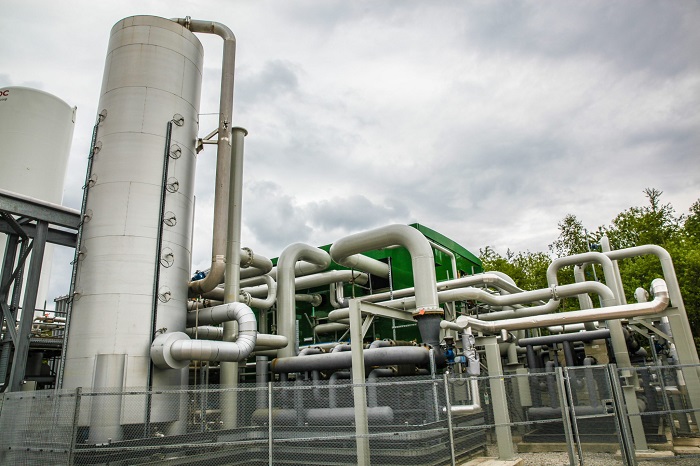
Oman’s solar story is already being written. Manah, Ibri II, and the next wave of solar IPPs moving through procurement have placed the Sultanate firmly among the region's renewable leaders. The next chapter, the one every solar-rich nation is racing to author, is about the long-duration energy storage technology that powers the grid after sunset. Lithium-ion batteries handle the first few hours effectively. What comes after is the harder problem, and it is increasingly being solved by a technology called Liquid Air Energy Storage, or LAES: a technology that aligns naturally with Oman's industrial base.
The principle underlying LAES is elegant in concept yet demanding in execution. Take ordinary air, compress it, and chill it to minus 194 degrees Celsius until it becomes liquid. Pour the liquid into a heavily insulated tank, where it sits holding energy until the grid calls for it. When demand spikes, release the liquid, let it warm and expand, and use the resulting pressure to spin a turbine. Maintaining cryogenic temperatures at industrial scale is one of the most sophisticated disciplines in modern energy infrastructure, which is precisely why this technology has remained the preserve of a handful of capable nations. The field is young. The leaders are still being chosen.
The technology has graduated decisively from white paper to grid asset. China Green Development Investment Group recently brought online a 60-megawatt, 600-megawatt-hour LAES facility in Qinghai Province, the largest of its kind anywhere in the world. In the United Kingdom, Highview Power is building its first commercial-scale plant at Carrington near Manchester, recovering compression heat through a molten salt loop to push round-trip efficiency past sixty percent.
Oman's natural advantage in this race deserves far more attention than it has received. Cryogenic engineering, the discipline of holding substances at extraordinarily low temperatures without losing them, is the most demanding part of any LAES plant. It is also the foundation of the LNG export business that has run out of Qalhat for a quarter of a century. The workforce that liquefies natural gas at minus 162 degrees Celsius is the same workforce that can liquefy air. The insulation expertise, the compressor specifications, and the maintenance discipline are all already here, refined over decades and built locally. Few nations possess this depth of capability as a domestic resource. Oman does.
The rest of the picture only sharpens the case. Vast open land in the interior. Industrial waste heat at Sohar, Sur, and Salalah, the kind that normally escapes, can be fed back into LAES turbines to draw more electricity from every tank. Pair LAES with the solar already on the way, and Oman owns dispatchable renewable power built on a uniquely sovereign supply chain.
LAES plants are built to last decades, and Oman Vision 2040 is built on the same long horizon. The next chapter of Oman's energy export story may already be within reach.
(*The author is a student at the British School Muscat and writes about technology)