Sunday 27 / September / 2026
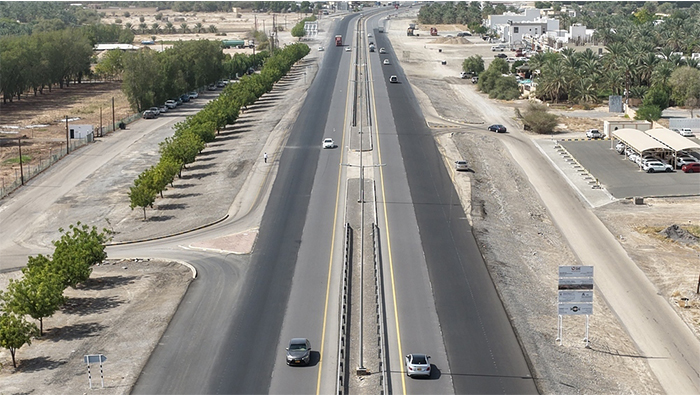
Nizwa: Al Dakhiliyah Governorate, in collaboration with the Ministry of Transport, Communications and Information Technology, is continuing to implement an integrated system of road and infrastructure projects across the governorate’s wilayats, with total investments exceeding OMR100 million.
The projects include internal and developmental roads being executed by the governorate at a cost of over OMR17.7 million, alongside strategic road projects being implemented by the ministry at a cost exceeding OMR82 million. These initiatives enhance infrastructure readiness, improve the efficiency of the transport network and support economic, tourism and urban development in the governorate.
Ongoing projects are distributed between internal roads serving residential neighbourhoods, urban plans and service centres under governorate development programmes, and strategic projects implemented by the ministry that include links between wilayats and governorates, as well as tourist and mountain roads. These align with the urban expansion and economic and tourism dynamism that Al Dakhiliyah Governorate has witnessed in recent years, boosting its developmental and investment competitiveness.
Sheikh Mahmoud bin Rashid Al Saadi, Wali of Nizwa and Acting Governor of Al Dakhiliyah, affirmed that road projects are key enablers of comprehensive development in the governorate, playing a pivotal role in improving connectivity between wilayats, population centres, economic and tourist sites, supporting commercial and investment activity and enhancing quality of life.
In a statement to Oman News Agency (ONA), he said that Al Dakhiliyah Governorate is coordinating with relevant authorities to implement high‑quality projects that respond to current and future development needs, contributing to a more efficient road network, better road safety levels and greater readiness to absorb urban and investment growth, in line with Oman Vision 2040.
In Nizwa, the governorate is continuing to implement internal road projects totalling 26 kilometres at a cost of over OMR2.2 million, with completion reaching about 76 percent by the end of April 2026, supporting urban expansion and improving links between residential and service areas.
A project to create an additional exit and add parking spaces at the Nizwa Central Market is also underway, with 33 percent completion, helping to improve traffic flow and ease congestion in the wilayat’s commercial and vital district.
On the strategic side, the ministry is implementing the Izki‑Farq dual carriageway project, 30.4 kilometres long, at an estimated cost exceeding OMR46 million. The project starts from South Qaroot, passes through Birkat Al Mouz, and reaches the Farq area in Nizwa. It includes 3.4 kilometres of service roads, a 1.1‑kilometre link to Sinaw, four bridges, 86 culverts, 12 roundabouts, traffic signals, and 723 lighting poles. Completion has reached about 27 percent. The project is one of the most vital road projects in the governorate, improving road efficiency, enhancing road safety and supporting commercial, tourist and economic activity between the wilayats.
The Nizwa‑Bahla dual carriageway project (Daris‑Jabrin) is also among the strategic projects linked to tourist and economic activity. Currently in the analysis phase, it includes two traffic signals, ten roundabouts, several pedestrian tunnels, and a bridge after the Bahla Souq area, improving road safety and traffic efficiency on one of the governorate’s vital axes.
In Bahla, the governorate is implementing internal road projects totalling 18 kilometres at a cost exceeding OMR1 million, including the design and construction of internal roads in the Al Qabidhiya area, supporting urban expansion and improving connectivity between residential and service areas. The Nizwa‑Bahla dual carriageway project is one of the vital projects supporting tourism in the wilayat, particularly as it connects to several heritage and tourist sites, including Bahla Fort and Jabrin Castle, enhancing tourism sector readiness and improving access to historical landmarks.
Strategic projects linked to the wilayat also include completing remaining works on the Sant‑Wadi Al Aala road, 13.17 kilometres long, updating previous designs, completing a 6.17‑kilometre section, and carrying out complementary works on the previously completed section. This will improve connectivity between villages and mountain areas, shorten travel times and raise traffic efficiency in highland areas.
In Manah, the governorate is implementing internal road projects totalling ten kilometres, with completion at about 70 percent, as part of efforts to develop infrastructure and improve internal connectivity between neighbourhoods, residential plans and public services. The ministry is also implementing a road project for the Oman Palm Development Company factory at a cost exceeding OMR1.07 million, including a 3.75‑kilometre link road, supporting infrastructure for the industrial and agricultural sectors and enhancing logistics for economic and productive projects.
In Al Hamra, several internal road projects are underway, most notably the second‑package internal roads project, 19 kilometres long, at a cost exceeding OMR3.5 million, with 90 percent completion, alongside a design and construction project for ten kilometres of internal roads at a cost of OMR1.03 million, with 95 percent completion, improving infrastructure efficiency and readiness in residential and development areas.
The wilayat has also received a consultancy services project for the design and supervision of the Wadi Ghoul dual-carriageway and commercial area project, currently under review, as part of efforts to develop traffic infrastructure in tourist areas and improve access to natural and commercial sites in the wilayat.
On the strategic side, the ministry, in collaboration with the governorate, is implementing the Jabal Shams road project at a cost exceeding OMR20.1 million, one of the most prominent projects supporting tourism and economic activity in the governorate. The road stretches over 32 kilometres, connecting mountain areas, tourist sites, resorts, and the Jabal Shams Front project. Completion is expected in January 2028, improving access to highland areas and supporting mountain tourism development. The project also includes treating steep gradients, improving road safety standards and installing crash barriers in high‑risk locations.
In Adam, internal road works continue over 16.6 kilometres at a cost of OMR1.09 million, with completion at about 97 percent, including the completion of culverts in the Al Sumairat area, improving wadi water drainage efficiency and enhancing road readiness and sustainability in various weather conditions. The wilayat is also linked to strategic projects, including completing remaining works on the Adam‑Thumrait dual-carriageway project, improving user safety and enhancing connectivity between Al Dakhiliyah and Al Wusta governorates.
In Izki, the governorate is continuing internal road works in the Shafi’e, Al Aqil and Al Quraisa areas, totalling 20 kilometres at a cost exceeding OMR1.2 million, with completion at about 30 percent, improving connectivity between villages and residential areas and enhancing access to basic services. The wilayat is also seeing implementation of the Izki‑Farq dual-carriageway project, alongside a road safety enhancement project on the Sultan Thuwaini bin Said Road, installing crash barriers in high‑risk locations, raising safety levels on vital roads in the governorate.
In Samail, the governorate is implementing several internal road projects, including the paving of the Al Nujaid‑Wadi Andam road, seven kilometres long, with 80 percent completion, alongside the first‑phase internal roads project, 13 kilometres long, at a cost exceeding OMR2.2 million, and the design and construction of internal roads in the Tawi Al Nisf plan. The ministry, in collaboration with the governorate, is also implementing the Aqabat A’afri and Al Saqari village road project at a cost exceeding OMR4.59 million, improving connectivity between villages and mountain areas, facilitating traffic and shortening distances.
In Bidbid, internal road works continue over 15 kilometres at a total cost exceeding OMR1.7 million, alongside the design and construction of internal roads in the Saih Al Ahmar plan, four kilometres long, keeping pace with urban expansion and population growth in the wilayat. The ministry is also implementing the Sultan Thuwaini bin Said Road (Bidbid‑Nizwa) rehabilitation project at a cost exceeding OMR10.5 million, with completion at about 77.48 percent, including treating damaged sections and installing protection and traffic signs, improving road readiness and raising road safety levels.
In Al Jabal Al Akhdar, work is underway to receive a consultancy services project for the design of a dual-carriageway and the development of the wilayat’s entrance, as part of efforts to improve the urban landscape, enhance traffic efficiency and raise the readiness of the wilayat’s tourist gateway. The wilayat is also seeing several projects linked to mountain roads, most notably the completion and upgrading of the Saih Qatnah road, 9.134 kilometres long, with completion at about 57.87 percent. This includes treating gradients and sharp bends, widening the road, constructing rainwater drainage channels, concrete and metal protections and implementing lighting and associated services, improving road safety and ensuring road sustainability in various weather conditions.
Work is also underway to upgrade wadi crossings on the Birkat Al Mouz‑Saiq road at several locations, alongside rehabilitating the Wadi Bani Habib road, 6.5 kilometres long, enhancing tourist movement and improving access to residential, agricultural and tourist areas in the wilayat.
Sheikh Mahmoud bin Rashid Al Saadi, Wali of Nizwa and Acting Governor of Al Dakhiliyah Governorate, affirmed that the ongoing road projects in Al Dakhiliyah reflect the importance attached to developing infrastructure as a key enabler of sustainable development. These projects play a vital role in supporting tourist and economic growth, stimulating investment, improving quality of life and enhancing connectivity between wilayats and development centres, boosting the governorate’s competitiveness and reinforcing its readiness to meet future development requirements across various sectors.


