Sunday 27 / September / 2026
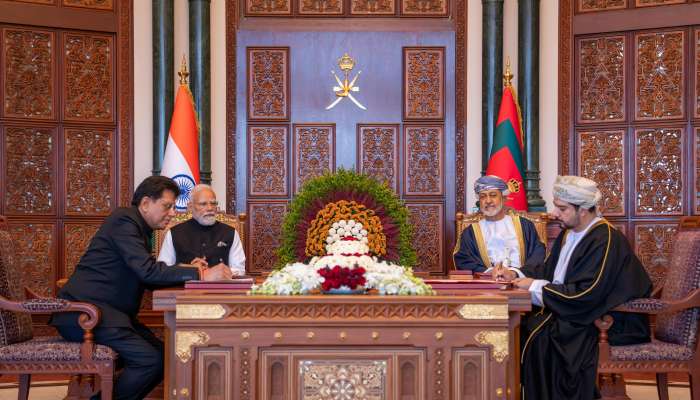
Muscat: The Ministry of Commerce, Industry and Investment Promotion affirmed that the Comprehensive Economic Partnership Agreement (CEPA) between the Sultanate of Oman and the Republic of India reflects the depth of economic and trade relations between the two friendly countries and consolidates their long-standing historical partnership.
Under the CEPA, Oman achieved a high level of trade liberalisation, covering 97.4 percent of total Omani goods based on current export volumes, while overall access to the Indian market reached around 77.8 percent, with special treatment for strategically important products. In return, Oman granted India gradual customs liberalisation according to clear timetables, reaching 99.22 percent, in line with national economic objectives and policies to protect local industries.
The Ministry explained that the agreement comprises 16 main chapters and several technical annexes regulating trade in goods, national treatment, customs duties reduction or elimination, import and export procedures, rules of origin, trade remedies, sanitary and technical measures, and trade facilitation. It also includes chapters on intellectual property, movement of natural persons, small and medium enterprises, economic and technical cooperation, as well as a dedicated chapter on trade in services addressing market access, preferential treatment and transparency.
The Ministry emphasised that the agreement gives special attention to protecting national industries through provisions on anti-dumping, countervailing and safeguard measures, balance of payments protection mechanisms, and the continued application of national Omanisation policies, including negative lists and professions restricted to Omanis.
On investment, the Ministry noted that India ranks among the top ten investing countries in Oman, with foreign direct investments totaling approximately OMR 286 million in the first quarter of 2025. These investments span the iron and steel, fertilizers, clean energy, healthcare and petrochemical sectors, supporting industrial value chains, boosting production capacity and creating job opportunities.
The Ministry added that the agreement is expected to enhance food and pharmaceutical security and strengthen cooperation in agriculture, health and biotechnology, as well as digital trade, logistics, mining industries, innovation, space and tourism, in line with Oman Vision 2040.
It highlighted the active involvement of the Omani private sector throughout the negotiation process, with contributions from major industrial companies helping shape a negotiating position that reflects market realities and opportunities for national firms in the Indian market.
The Ministry affirmed that the agreement does not conflict with unified Gulf obligations nor affect trade flows among GCC countries. Government procurement was excluded to preserve national legislative sovereignty, while legal reviews confirmed the agreement’s compliance with the Basic Law of the State and relevant international agreements.
Economic estimates indicate that customs duty liberalisation will significantly enhance the competitiveness of Omani products in the Indian market, which previously faced average tariffs of around 17 percent. With the agreement’s implementation, Omani companies will gain access to a market exceeding USD 17 trillion and a consumer base of more than 400 million people, supporting industrial growth and expanded production capacity.
The reduction of customs duties on raw materials imported from India is also expected to lower production costs in Oman, strengthen manufacturing supply chains, and reinforce the Sultanate’s role as a regional trade and logistics hub linking the Gulf, the Middle East and the Far East.
The Ministry confirmed that a national rapid response team will be formed to monitor the agreement’s implementation and address challenges faced by affected sectors and companies. It also expressed its aspiration to complete the necessary legislative and legal procedures to ratify the agreement ahead of its entry into force, further enhancing Oman’s position in the global trading system and supporting a diversified, competitive and sustainable economy.
The Ministry stressed that the agreement represents a new milestone in strengthening trade exchange, facilitating access to goods and services, attracting quality investments, and expanding cooperation in priority sectors for both sides.
The Ministry explained that the signing of the agreement comes within the framework of the continuous development of bilateral relations and as a direct outcome of the high-level visit of His Majesty Sultan Haitham bin Tarik to the Republic of India. The visit laid solid foundations for expanding economic cooperation and opening new horizons for trade and investment partnerships.
It noted that, following the visit, the Sultanate of Oman reactivated negotiations through a comprehensive and integrated approach, which included economic, legal and technical assessments aimed at ensuring maximum benefit from the agreement.
The Ministry pointed out that negotiations were based on specialised studies, including an economic study prepared by Deloitte & Touche at the Ministry’s request.
The study assessed the expected impacts of customs tariff liberalisation, export growth and investment expansion, confirming the agreement’s feasibility and its potential to enhance added value within the national economy and strengthen the competitiveness of Omani exports in global markets.
The Ministry stated that negotiations spanned five main rounds between 2023 and 2025, covering general frameworks, legal and regulatory chapters, and technical reviews related to rules of origin, sanitary and technical measures, trade facilitation, trade in goods and services, and trade remedies.
The talks also addressed cooperation, intellectual property and dispute settlement, resulting in a balanced final agreement that safeguards the interests of both sides and preserves Oman’s Gulf and international commitments.
The Ministry revealed that trade exchange between the Sultanate of Oman and the Republic of India reached approximately USD 7 billion in 2024, making India one of Oman’s key trading partners, particularly in non-oil exports. These include polyethylene, urea, gypsum, ethylene, and several industrial products linked to the petrochemical and metals sectors. Trade volumes are expected to expand further due to the preferential market access granted under the agreement.