Sunday 27 / September / 2026
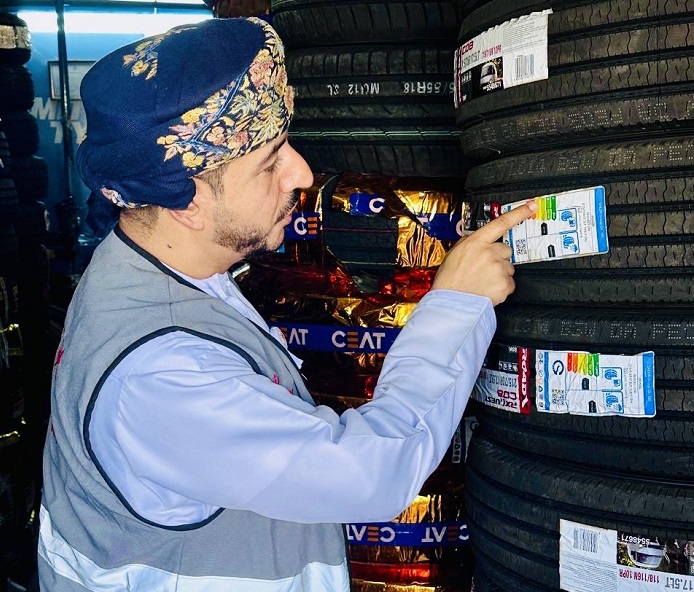
Muscat: The Ministry of Commerce, Industry and Investment Promotion (MoCIIP) has conducted inspections of tyres traded in the local market to assess sample quality and ensure the safety of road users.
Shaima bint Khamis Al Balushi, Head of the Standards and Metrology Inspection Department at MoCIIP, said inspections of 58 samples recorded a high compliance rate of 96.55 percent, with only two cases of non-compliance. She noted that the initiative represents a key step in supporting product safety and quality oversight.
The project reflects MoCIIP’s commitment to strengthening market surveillance systems, enhancing the capabilities of national inspection and conformity teams, protecting consumers, and reinforcing confidence in local markets.
Shaima bint Khamis Al Balushi explained that the results demonstrate the effectiveness of existing inspection mechanisms and highlight the vital role of the GCC Conformity Mark in ensuring product safety and reliability.
She stressed the importance of carrying out random checks on customs transactions cleared through automatic systems to verify the completeness of documentation, applying penalties to non-compliant companies, and strengthening border controls through intensified inspection of tyre shipments.
She also emphasised the need to continue joint inspection campaigns with relevant authorities and to raise consumer awareness through outreach initiatives that underline the importance of the GCC Conformity Mark
As part of the project, a specialised training workshop titled “Tyre Technical Regulations and Market Surveillance” was held in September.
The workshop was delivered by Eng. Ibrahim Al Rahbi from the Gulf Standardisation Organisation (GSO), with participation from inspection and conformity teams across Oman.
The Ministry, represented by the Directorate General of Standards and Metrology (DGSM), implemented the GCC Tyre Market Survey in cooperation with the GSO to ensure continued compliance of products bearing the GCC Conformity Mark and to verify that tyres traded in member states meet approved technical regulations.
The workshop covered GCC technical regulations for passenger tyres imported from China, India, Thailand and Taiwan, tyre manufacturing stages, international best practices in market surveillance, and the role of the GSO in tyre safety. It also included practical training on visual and laboratory inspection methods and sampling procedures.
Field visits recorded several observations, including tyres without GCC data labels, the use of European tyre efficiency labels either alone or alongside GCC labels, discrepancies between European and GCC label data—particularly in wet grip and energy efficiency ratings—and potentially misleading information, such as tyres branded with a Singaporean company name, claims of German engineering, and Chinese manufacturing origins.