Friday 02 / October / 2026
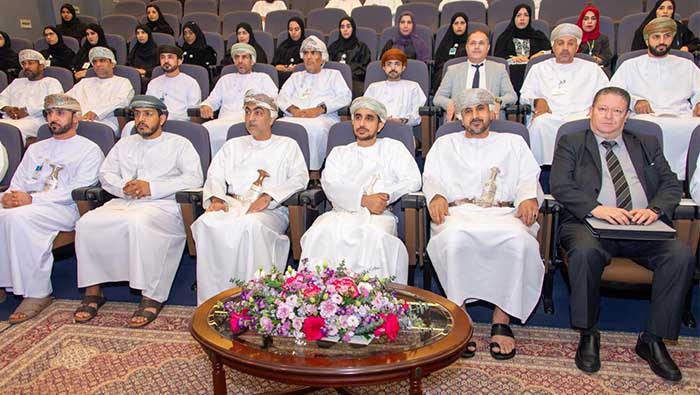
Muscat: The Ministry of Education and the Ministry of Transport, Communications and Information Technology celebrated the official launch of the UNESCO Readiness Assessment Methodology (RAM) report results regarding the assessment of the Sultanate of Oman’s readiness to expand ethical, inclusive, and human rights-based Artificial Intelligence governance.
The ceremony witnessed the announcement of the RAM report results as the national reference for Artificial Intelligence (AI) governance in the Sultanate of Oman.
The event also included a presentation of Oman’s vision for the AI pathway, a review of the Omani model in this field, and a highlight of the primary pillars of UNESCO’s recommendations. These efforts aim to unify the understanding of government entities and academic institutions regarding the concept of ethical and human rights-based AI, while enhancing Oman's regional and international standing in the ethical governance of modern technologies.
The event was held under the auspices of Dr. Badr Hamoud Al Kharousi, Undersecretary of the Ministry of Education for Education, and in the presence of Najib Mokni, Programme Specialist for Communication and Information Sector at the UNESCO office to the Gulf States and Yemen. The ceremony was also attended by a number of decision-makers, representatives of government agencies, academic and research institutions, the private sector, and innovation pioneers.
Hassan Fida Al Lawati, Head of the National Program for Artificial Intelligence and Advanced Technologies at the Ministry of Transport, Communications and Information Technology, emphasised that the RAM initiative represents a practical and systematic tool that enables countries to assess their current status, identify strengths and opportunities for improvement, and monitor challenges. He noted that this supports the development of policies and regulatory and legislative frameworks aligned with global best practices, adding that the launch of the report’s findings reflects the Sultanate of Oman’s commitment to international standards in a manner consistent with national priorities and the state’s institutional and developmental context.
Dr. Mahmoud Abdullah Al Abri, Secretary of the Omani National Commission for Education, Culture and Science, stated that the Sultanate of Oman is according increasing attention to the Artificial Intelligence file due to its pivotal role in supporting sustainable development. He pointed out that this interest has been manifested in the launch of the National Strategy for Artificial Intelligence and Data, investment in national capacity building, and the promotion of innovation and responsible digital transformation.
He affirmed that the report represents a critical milestone and a supportive tool for decision-makers, researchers, and national institutions in adopting AI ethically and sustainably.
At the conclusion of the ceremony, Dr. Ahmed Musa Al Balushi, Director of the Science Affairs Department at the Omani National Commission for Education, Culture and Science, reviewed the primary findings of the report. He affirmed its importance as a national diagnostic tool that measures the level of readiness to adopt Artificial Intelligence ethically and responsibly. He also addressed UNESCO’s vision of Oman’s trajectory as an integrated national transformation project linked to good governance, the protection of human rights, the achievement of sustainable development, and the support of "Oman Vision 2040" objectives and the knowledge-based economy.
Furthermore, he highlighted several national readiness indicators, including the formation of the National Committee of AI Experts.