Wednesday 14 / October / 2026
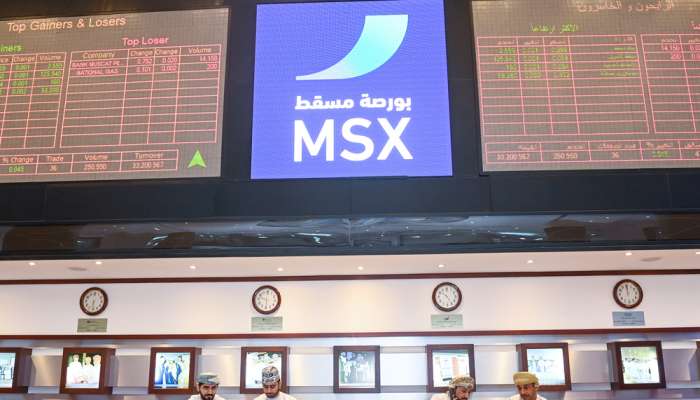
Muscat: The Muscat Stock Exchange (MSX recorded the best performance among Gulf Cooperation Council (GCC) stock exchanges in the first half of this year, after the main index rose by 28 percent, exceeding 7,500 points.
The Muscat Stock Exchange also topped the Gulf markets in terms of the growth rate of trading value, which jumped by 650 percent, approaching OMR7 billion, and 8 companies were able to enter the list of the top 30 companies in terms of the percentage increase in stock prices in the Gulf stock exchanges.
This performance reflects the growing confidence of investors in the Muscat Stock Exchange and the expected returns on investment in it, as well as the ability of the exchange to absorb international economic changes and benefit from the improvement achieved by public shareholding companies during the past months and the positive disclosures they announced.
Gulf stock exchanges witnessed volatile performance in the first half of this year, pressured by geopolitical factors in the region. The Muscat Stock Exchange and the Saudi market managed to close higher, while other Gulf stock exchanges recorded declines ranging between 1 and 5 percent.
The main index of the Muscat Stock Exchange recorded three record levels in the first half of this year, rising to 6,000 points in January, recording a new record high of 7,000 points in February, and increasing its gains to 8,000 points by March 29, recording its best levels since 2008. It continued its rise in April, and on May 4 it managed to achieve the highest gains, rising to 8,397 points.
However, it could not surpass this level with increased selling pressures to take profits after the record highs recorded by many leading stocks, to close June trading at 7,507 points, adding 1,641 points during the past six months.
The Muscat Stock Exchange benefited in the first half of this year from the growth in performance of various sectors listed on the exchange, especially banks, investment companies, telecommunications, energy and industrial companies.
In the first half of this year, the Muscat Stock Exchange attracted more liquidity from local and Gulf investment funds and institutions. Individual purchases also recorded strong growth, with the improvement of local economic indicators and the rise in profits of publicly listed companies and their improved financial performance.
This was reflected in the trading value, which recorded an exceptional performance, and in the total market capitalisation of the Muscat Stock Exchange, which rose by the end of the first half of trading to OMR36.72 billion, recording gains estimated at OMR4.71 billion compared to its level in December at OMR32.11 billion.
Total trading value of MSX in the first half of this year rose to OMR6.9 billion, compared to OMR917.2 million in the same period last year and OMR711.5 million in the first half of 2024. The number of transactions executed rose to 733,000 compared to 147,000 transactions in the same period last year and 133,000 transactions in the first half of 2024.
April recorded the highest trading value at OMR1.5413 billion, March came in second with trading at valued at OMR1.4264 billion Omani riyals, February came in third with trading at valued at OMR1.2947 billion Omani riyals, while June recorded the lowest trading valued at OMR776.1 million.
In terms of the number of transactions executed, June came first with 159,000 transactions, April came second with 131,000 transactions, and February came in third with 122,000 transactions.
The first half of this year witnessed several increases recorded by public shareholding companies listed on the stock exchange. Eight companies were among the top 30 companies that recorded an increase in their share prices on the Gulf stock exchanges. These companies are: Galfar Engineering and Contracting, Raysut Cement, Voltamp Energy, Al Anqa Energy, Asyad Shipping, Oman and Emirates Investment Company, Al Anwar Investments, and Bank Dhofar. This rise was supported by financial results, increased investor confidence in the Muscat Stock Exchange, and their expectations of the companies’ ability to achieve stable returns.